



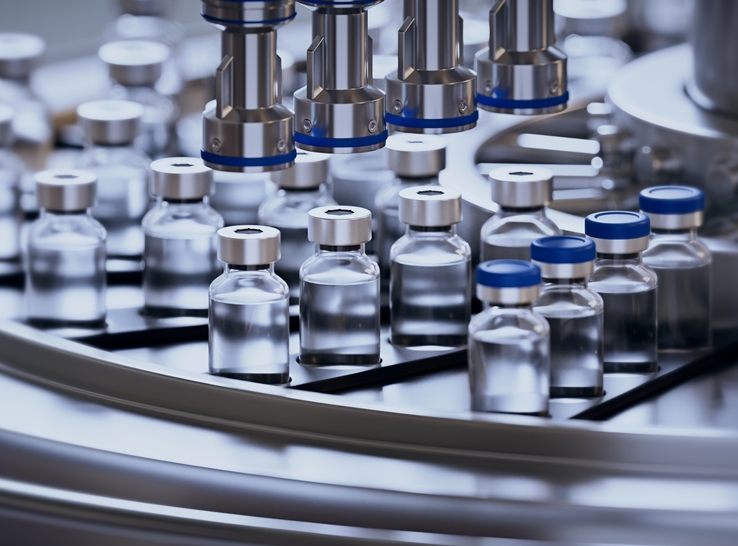
 Behind every successful poultry operation is a dependable vaccine supply chain. But producing vaccines is no small feat — it requires precision, foresight and the ability to adapt to biological and regulatory challenges. Here, Daniel Hamby, senior associate director of manufacturing science and technology at Boehringer Ingelheim, gives a behind-the-scenes look at vaccine production and explains what it takes to deliver consistent, high-quality products to the industry.
Q: To start, what does it take for a site to be USDA-approved to manufacture recombinant and live poultry vaccines?
A: In the United States, poultry vaccine manufacturers are regulated and licensed by the USDA’s Center for Veterinary Biologics. Approval means both the facility and its processes have been inspected, reviewed and tested to ensure compliance with regulatory standards. Each product must also be registered individually, with data verifying its safety, potency, purity and efficacy submitted for review.
In other words, USDA approval is company-specific, site-specific and product-specific. It ensures that every vaccine we produce and every manufacturing process we deploy are rigorously vetted to guarantee that they are consistent, pure and work as intended.
Q: Could you walk us through the general steps of poultry vaccine manufacturing?
A: Poultry vaccines are biologics, not pharmaceuticals, so their production is a biological, or living, process. For most of our products, this means the use of specific pathogen-free (SPF) eggs. These eggs come from flocks rigorously tested to make sure they’re free from avian pathogens that could compromise the vaccine. We receive them weekly, and they are the foundation for production.
Eggs, due to their own biological nature, bring unique challenges. It takes about 28 weeks to raise a laying hen from an egg, so we need to forecast our supply needs six months in advance. And while these eggs are pathogen-free, they still carry natural bacterial bioburden. That means we must use specialized techniques to eliminate contamination risk. Maintaining strong relationships with suppliers and sharing data with them are critical to ensuring the eggs meet our needs for quality and consistency.
Q: What are some of the most common challenges that impact production and supply?
A: The biggest challenge comes from the biological nature of our starting material. Eggs vary week to week and flock to flock, which means we need robust processes to account for that variability. Contamination risk is always present, and if a flock tests positive for an extraneous pathogen, we not only have to perform additional testing on all products made from that flock but also lose that supply source.
Another challenge is timing. For example, with Marek’s disease vaccines (VAXXITEK®, etc.), production has to be very fast. We move from receiving eggs to finished product in about two weeks, and we rely heavily on in-process controls and operator expertise. That makes process consistency and operator skill absolutely vital.
Q: How do regulatory requirements like USDA submissions and approvals affect timelines?
A: Every batch we produce goes through testing for safety, purity and potency — not just internally at Boehringer but also potentially at the USDA. Alongside our data, we submit samples and documentation to the agency. The USDA can choose to run confirmatory tests, which sometimes adds time. Typically, though, they respond quickly, often within two weeks. This dual release system may add steps, but it ensures an extra layer of confidence that every vaccine meets strict standards of both Boehringer and the USDA before reaching customers.
Q: What strategies or investments has Boehringer made to improve consistency and predictability in production?
A: We’re constantly looking for ways to reduce variability and strengthen standardization. That includes investing in new technologies such as automation, statistical process control, machine learning and artificial intelligence. These tools help us move processes that were once qualitative and subjective into more quantitative and objective measures. That way, we’re not relying solely on operator judgment — though their expertise remains essential — but also supporting them with technology that improves accuracy, consistency and efficiency.
Q: Are there particular innovations or process improvements that help minimize disruptions or bottlenecks?
A: One of the biggest changes is how closely we now work with our SPF egg suppliers. In the past, we simply received eggs from multiple flocks, worked with what we got and managed performance/data internally. Today, we share detailed data back with suppliers and request eggs from specific flocks that perform better in our processes, as well as help educate our suppliers on what “good” looks like for our processes and technologies. That collaboration has improved throughput and consistency.
Beyond that, we’re always evaluating equipment and processes to make sure our teams have the best tools available to be successful. It’s about continual improvement and challenging ourselves to adopt new ways of working without ever compromising product quality or compliance.
Q: How do these improvements benefit poultry producers and the industry as a whole?
A: At the end of the day, it’s about delivering vaccines when they’re needed and making sure they perform consistently batch after batch. In poultry, timing is critical — especially in the broiler industry, where birds have a lifespan of just a few weeks. Our vaccines have to be at the hatchery, on the right day, every time. By continually refining our processes, we’re supporting customer confidence, protecting flocks and helping producers maintain productivity.
Q: What does a more resilient vaccine supply chain mean for producers and animal health overall?
A: It means being able to respond quickly as new or evolving pathogens and challenges emerge. Avian influenza and avian metapneumovirus are two examples, but they won’t be the last. Boehringer continues to invest in research, development and manufacturing capabilities to stay ahead of the evolving needs of our customers.
Poultry production is fast-growing, and vaccines must be reliable, effective and available at the right time. Our goal is to be the supplier of choice by delivering products that not only meet regulatory and quality expectations but also adapt to the changing needs of the industry.