
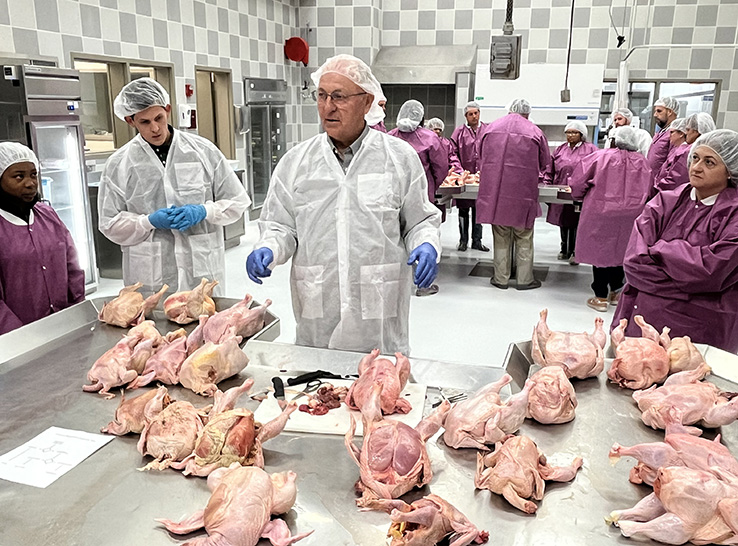
Flock uniformity and sanitary dressing: how live-side variation impacts the processing plant
By Douglas L. Fulnechek, DVM,
Senior Public Health Veterinarian,
GTS Health



By Douglas L. Fulnechek, DVM,
Senior Public Health Veterinarian,
GTS Health

Cases from an outbreak of aMPV among broiler flocks in Mississippi are mostly coming with secondary infections, which can exacerbate disease severity. A research team led by Autumn Gregg, DVM, a poultry resident at Mississippi State University, investigated the infections appearing in the outbreak.

A new rapid testing method is helping poultry producers detect Salmonella faster and more efficiently than ever before. The method, developed by Ceva Animal Health, dramatically shortens turnaround time while reducing testing costs by nearly two-thirds, according to James Mills, scientist at Ceva Animal Health.
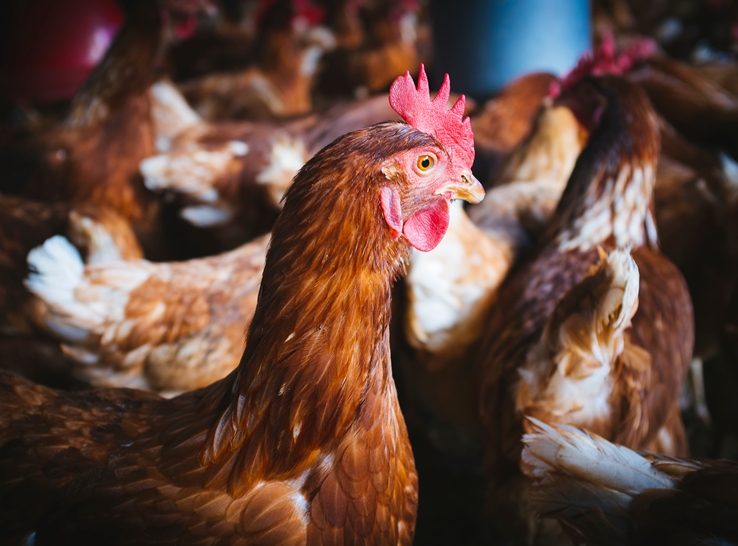
Salmonella exposure to consumers from eggs has been a decades-long concern. Richard Gast, poultry research microbiologist at USDA’s US National Poultry Research Center in Athens, Georgia, has developed two research projects to gain more perspective on Salmonella Enteritidis in cage-free layer housing.
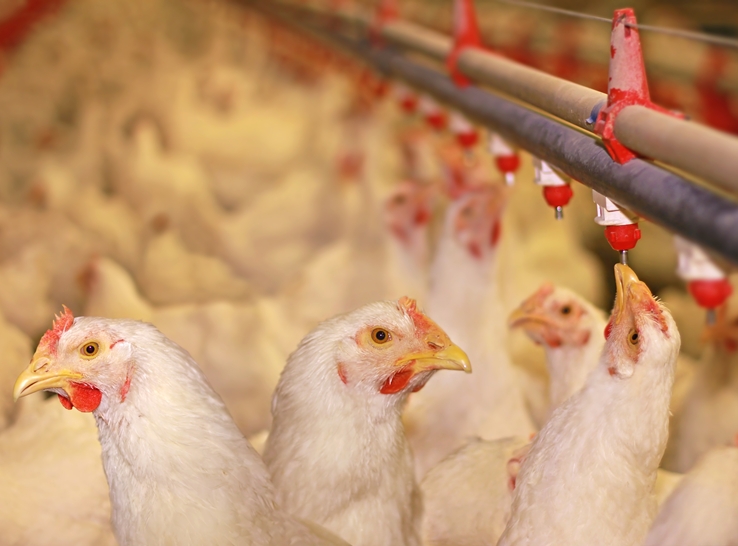
Adding organic acids to poultry drinking water has been suggested as a potential intervention in managing Salmonella, but research by Auburn University scientists showed otherwise.

A joint research study conducted by the USDA and North Carolina State University researchers demonstrated that the type of housing system used for laying hens can influence levels of human pathogenic Salmonella in their organs.
By Douglas L. Fulnechek, DVM,
Senior Public Health Veterinarian,
GTS Health (formerly Gaydos Technical Services)

Responsible antibiotic use is not a new concept to the poultry or other food-animal production sectors, but, says Randy Singer, DVM, PhD, it’s important to put the conversation back in the context of the Veterinarian’s Oath, and first ensure the safety, health and overall well-being of the animals.

A deep dive into Eimeria research reveals a strong inter-relationship between coccidiosis and secondary infections, such as necrotic enteritis, that poses formidable disease control challenges in poultry.

Meeting tougher demands by the USDA’s FSIS to control Salmonella doesn’t warrant reinventing the wheel, according to Chuck Hofacre, DVM, PhD, president of the Southern Poultry Research Group, Inc.
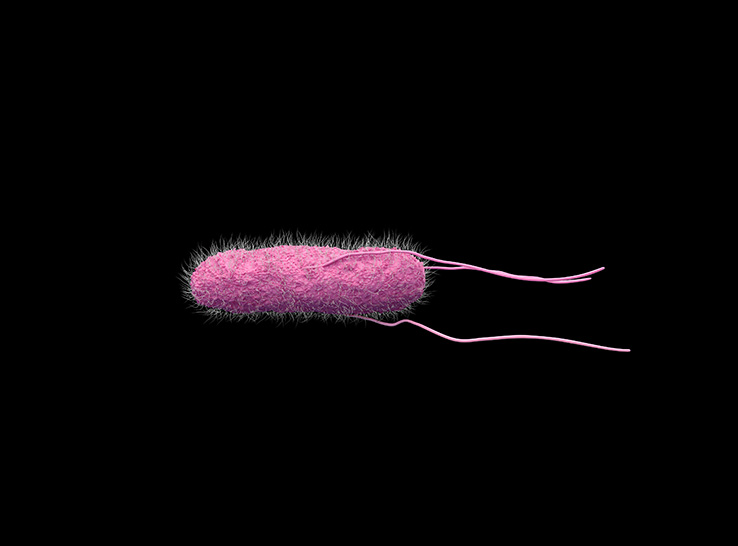
Researchers from the University of Minnesota found evidence of S. Typhimurium vaccine origins persisting in commercial poultry production through processing and developed a tool to rapidly determine if a field isolate is of vaccine origin and not a concern to human health.
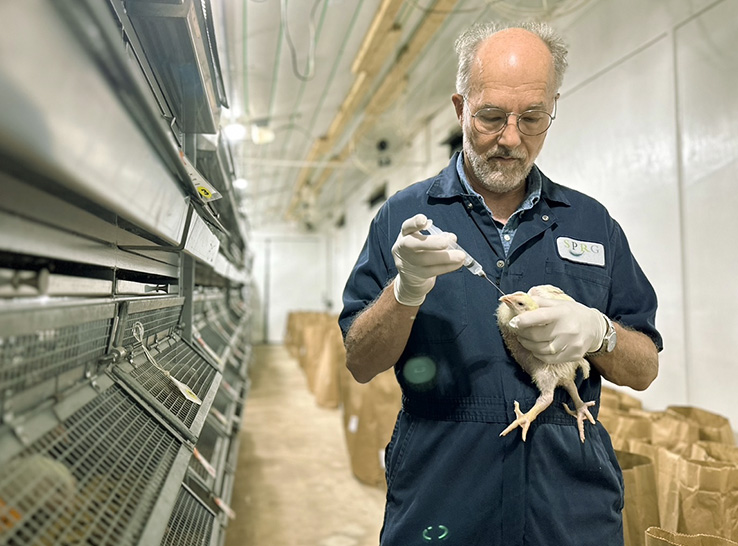
Controlling foodborne pathogens in poultry requires nearly identical approaches whether production is conventional or antibiotic-free, according to Chuck Hofacre, DVM, PhD, president of the Southern Poultry Research Group, Inc.