
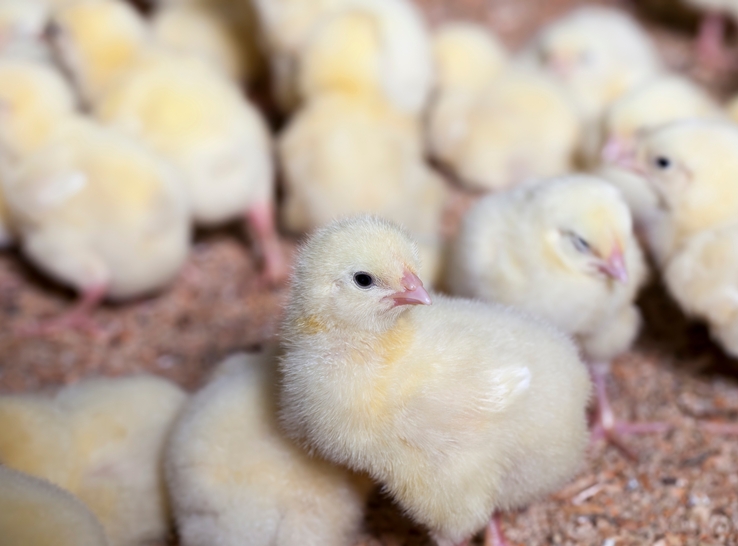
Six hours: Why the feed-deprivation clock impacts feed conversion, yield, food safety and profit
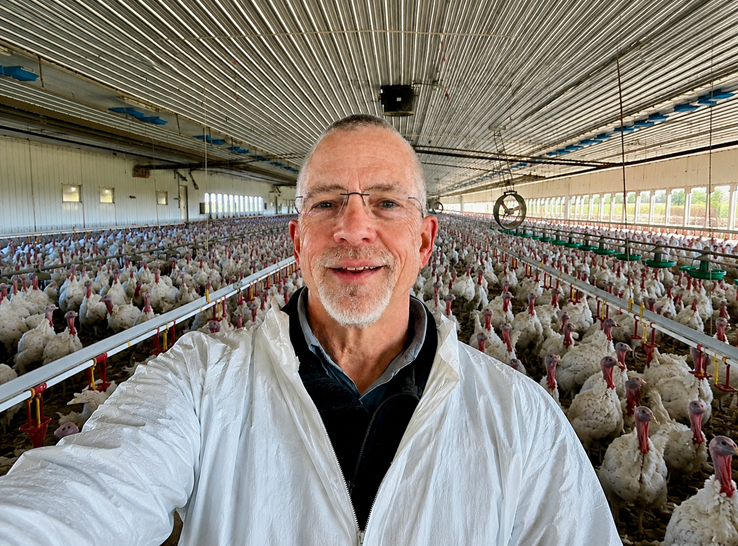
By Douglas L. Fulnechek, DVM
Public Health Veterinarian
GTS Health

By Douglas L. Fulnechek, DVM
Public Health Veterinarian
GTS Health

An innovation taking the broiler/breeder industry by storm is Comfort Nest™, a mechanical egg-laying system from VAL-CO that more than doubles the nest size to accommodate high-yield broiler-strain hens.

Can laser enrichment improve broiler health and marketability? Kayla Elmore, a graduate student at Iowa State University, conducted a study to investigate this question, following up on two previous studies that reported increased activity among broilers exposed to lasers.

Hatchery day-of-age vaccination has been a cornerstone of broiler health for decades, but new research is shedding light on the mechanisms that help it protect chicks despite the immaturity of their immune systems. The findings are significant because it is widely used throughout the poultry industry, yet relatively little is known about how newly hatched chicks develop protection following vaccination.

Broiler breeder fertility has been declining over the past decade, raising concerns about both productivity and the long-term sustainability of the industry. Marcela Quino, a graduate student at Auburn University, examined how time of day, rooster competition and behavior influence mating success and fertility during the early production period.

The starter-phase duration for broiler breeders can affect their reproductive performance later, including development, fertility and hatchability, according to a study led by Edgar O. Oviedo-Rondón, DVM, MSc, PhD, Dipl. ACPV, North Carolina State University.

A university challenge study has examined how recombinant HVT-ILT vaccines used at the hatchery affect the response to live, chicken-embryo-origin ILT vaccines applied later as part of a dual infectious laryngotracheitis vaccination program.

Researchers at North Carolina State University evaluated the effects of housing systems and genetic strains on broiler mobility in slow-growing strains vs fast-growing strains in both indoor and outdoor environments.

Consumer interest in poultry welfare has led to the expansion of unconventional poultry-rearing systems, such as silvopasture. Justin Lowery, MS, and a team of researchers from North Carolina State University conducted a broiler research trial comparing the impact of conventional and silvopasture production systems on the cecal microbiota of slow- and fast-growing broilers.

Cases from an outbreak of aMPV among broiler flocks in Mississippi are mostly coming with secondary infections, which can exacerbate disease severity. A research team led by Autumn Gregg, DVM, a poultry resident at Mississippi State University, investigated the infections appearing in the outbreak.

Gut health is often discussed in poultry production. But according to immunologist Michael Kogut, PhD, lead research microbiologist at the USDA-ARS, College Station, Texas, the term is really about gut homeostasis, which enables birds to maximize performance and reach their full potential.

Eric Shepherd, DVM, Zoetis, takes a look at potential IBD vaccination programs that may disrupt field virus pressure, restore disease control and support overall flock health.