



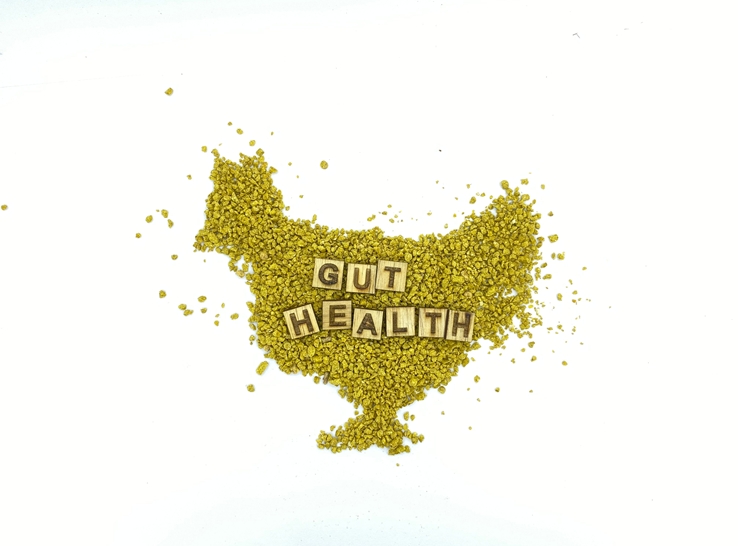
The gut microbiome is the new frontier in poultry research, and few people know more about it than Lisa Bielke, PhD, distinguished scholar of turkey health at North Carolina State University.
The well-known researcher has spent more than a decade focused on gut bacteria and how to manipulate them for improved poultry health, nutrition and disease control.
Bielke discussed her cutting-edge research and how it evolved during the “A Gut Feeling: Turning Gut Science into On-Farm Results” episode of the Unplucked podcast produced by the Poultry Science Association.
First targeted probiotic
Bielke’s fascination with the gut started while working on her master’s degree. “We were in a lab working on the idea of selecting a probiotic to have a specific function,” she related. “In this case, the function was against Salmonella in birds. But we noticed that the probiotic benefited turkeys in a lot of ways, leading us to the idea that bacteria are in the gut for a reason.
“One of my pet peeves is calling bacteria ‘commensal,’ because they’re not just there; they are doing something,” she continued. “That really piqued my curiosity. What are the bacteria doing, and how can we manipulate them not just with probiotics but in other ways?
“And that just opens up this whole area of research that can keep somebody busy for a lifetime,” Bielke acknowledged.
Big data boost
Today, Bielke’s gut health research is evolving rapidly as new technologies and big data come online.
“Omics technologies have really opened up what we can do in terms of gut health,” she explained. “We’re no longer trying to culture bacteria and run these little tests. Instead, we can run genomic sequencing and get a long list of bacteria, some of which we don’t even know what they are. Nobody’s been able to characterize them before. We can use omics technology to know what the bacteria are doing.”
But the amount of data produced by the new technologies can be daunting. Bielke admits the data produced is more than one person or laboratory can sort through. And once a study is completed, more questions arise beyond the original research goal.
“Every time we get some data, we can go back to it and look for something else to do,” she said.
Vertical transmission
Bielke’s latest research looks at the vertical transmission of bacteria.
“That’s the one I’m excited about today,” she related. “What comes from the parent stock not only affects their pioneer colonizers that make this established microbiome within the gut, but can also affect how much we can change it.”
Salmonella is a vertically transmitted bacterium that Bielke is currently studying. “Salmonella gets me excited because it’s not just a food-safety pathogen. It also affects gut inflammation, which leads to a conversation about gut health,” she said.
Salmonella was once considered a concern only at the processing plant. But it clearly affects bird health.
“It’s subclinical and can make birds more susceptible to other diseases,” Bielke added. “It can affect their feed-conversion ratio and bone density. Salmonella goes way beyond just being a food-safety pathogen.”
Measuring inflammation
Bielke is now examining the inflammation aspect of disease. “Fifteen years ago, I naïvely thought we were going to set up a few ways to measure inflammation and have all the answers we needed,” she said. “As it turns out, it’s not that simple.
“We’ve been trying to find other ways to characterize inflammation. Fortunately, it tends to be a fairly universal problem,” she continued. “We can use medicine from humans or other animals and adapt it to poultry.”
Ideally, Bielke envisions producers using a blood draw to test for inflammation instead of collecting tissue from terminal samples.
She is also working on a longevity project to measure how birds age as they live longer. The goal is to help breeding stock and layers stay in production longer.
From bench to barn
Although research may seem a long way from the farm, it does reach the poultry barn.
“I used to think that some of my research was never going to be used in the poultry industry because it wasn’t practical,” Bielke said. “But what I’m doing in the lab doesn’t need to be practical. If it’s worth doing, then somebody will figure out how to make it useful.
“So definitely, I’ve seen things really come around and develop. It changed my mind even on how I thought about them,” she added.
Probiotics are an example of research-to-farm success. “We’ve gone from just giving birds something for [disease control] to finding probiotics that have specific functions and will help solve our needs,” she said. “We know one probiotic won’t do all the things. But probiotics have definitely evolved over the last few decades.”
Future gut research
Today, Bielke believes gut research will continue to shift from just disease control to manipulating the microbiome for health and nutrition.
“We actually rely on bacteria in the gut to do a lot of processing and digesting of food so the animals can absorb it,” she said. “There are enzymes that are produced by the animal, but we also depend on the bacteria.
“So how can we manipulate them to benefit our birds even more?” Bielke asked. “And what can we do in terms of putting more functional aspects into the microbiota that the birds have?
“It’s not just diseases anymore. It’s diseases, health and nutrition.”
To listen to the complete podcast with Bielke, click here.