



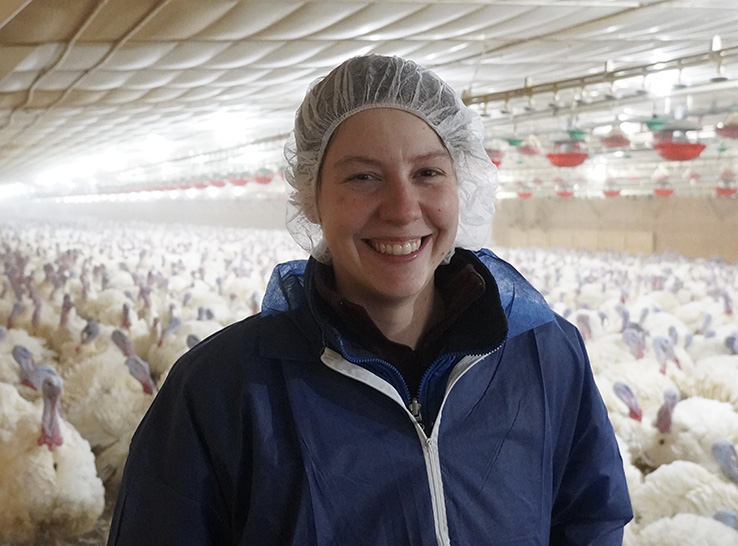
By Allison Pullin, PhD
Prestage Department of Poultry Science
North Carolina State University
Raleigh, North Carolina, USA
Providing broiler chickens with outdoor access is often perceived by consumers to improve animal welfare by giving birds additional space and environmental complexity to express behaviors. Additionally, this management practice provides producers with an opportunity to differentiate their products in the marketplace, often for a premium price.
Although there is scientific evidence supporting some improvements in animal-welfare outcomes with outdoor access, there is also substantial variability across farms with outdoor access. Variability in animal-welfare outcomes is particularly associated with the label-claim criteria, overhead cover, range condition and bird characteristics.
Label-claim criteria
Labels on chicken meat products indicating outdoor access include “USDA organic,” “free-range” and “pasture-raised,” the last two of which are broadly defined by third-party animal-welfare certification and audit programs (e.g., Certified Humane, American Humane and Global Animal Partnership [GAP]).
USDA organic
This claim requires that animals be provided with access to the outdoors, but the amount of space, duration of access or quality of the outdoor area are not currently specified. However, the USDA recently announced that it will require 1 square foot of outdoor space for every 5 pounds of bird in the flock or at least 2 square feet of outdoor space per broiler by 2029.
Free-range
Free-range is commonly defined as birds having access to an outdoor range with vegetation and overhead cover. Certified Humane requires 2 square feet, and GAP requires an outdoor area that is at least 75% of the indoor floor space, depending on the “step” the producer is certified for, where steps have increasing standards for animal care (i.e., Step 3, Step 4 or Step 5).
For most free-range animal-welfare auditing programs, birds have free choice to enter and exit the range through doors in the poultry house for at least 8 hours per day, and the birds are confined in the house at night for predator protection.
However, various conditions, such as inclement weather, predation risk and range condition, can lead to birds being confined. Also, there is no minimum number of days that birds should have access to the range. Consequently, in free-range programs, there may be substantial variation between farms in how much outdoor access the birds actually receive.
Pasture-raised
Pasture-raised claims were recently regulated by the USDA, requiring producers to provide written documentation that animals are raised on land covered mostly with vegetation for most of their lives. Pasture-raised is differentiated from free-range by Certified Humane as birds having guaranteed daily exposure to an outdoor pasture area that is covered with vegetation for all 12 months of the year. They cannot be indoors for more than 14 consecutive days, assuring more consistent outdoor access than free-range.
Overhead cover
Some form of overhead cover to provide shade is often required in third-party animal-welfare guidelines, but the quality and quantity of shade are not specified. In my experience as a poultry-welfare auditor, providing shade near the exit doors of the poultry house minimizes the drastic change in light intensity as birds move from inside to outside, reduces heat stress and provides protection from aerial predators. More outdoor exploration has been associated with lower incidences of lameness, higher bone mineral content and lower ascites indexes.
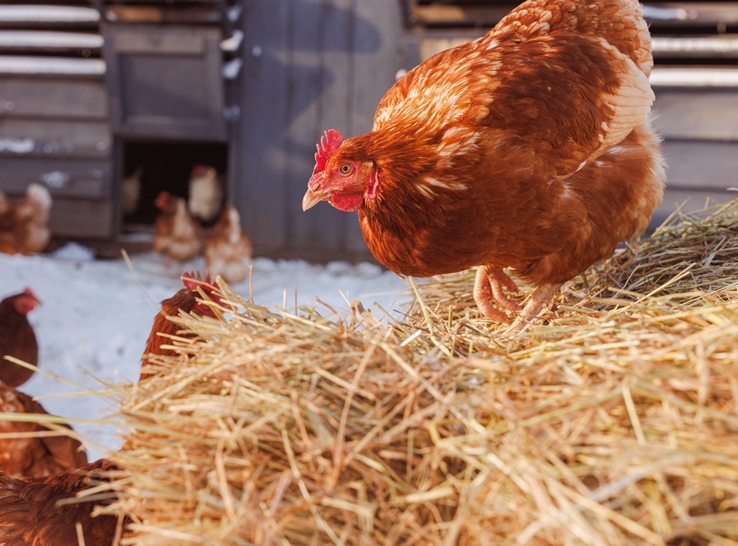
More of the flock will use the outdoor area when shade is provided by vegetative cover (e.g., trees, bushes and tall grasses) rather than by artificial shade structures. Pending placement, vegetative cover, especially trees, can provide more extensive overhead protection than artificial structures and maintain drier patches of soil for dust bathing.
Broilers use outdoor areas more in the spring and summer than in the winter, likely because vegetation cover is greater during these seasons. Farms that don’t have sufficient shade structures are more likely to have caked soil with higher moisture after rain events and, consequently, higher incidences of footpad dermatitis.
Silvopasture is an agroforestry approach that integrates animal production with tree production, thereby offering extensive overhead vegetative cover. However, this system is not currently differentiated on product labels or within third-party animal-welfare guidelines. Furthermore, third-party animal-welfare programs prohibit using the outdoor access land for crops. If the tree production is considered a crop (i.e., orchards), there may be challenges with some certifications.
Outdoor range condition
Vegetative coverage on the ground is key for maintaining soil condition and promoting foraging behavior, but only the GAP program requires at least 25% of the outdoor area to be covered with vegetation. Other guidelines only specify active management of the range and that living vegetation should be present.
The specific vegetation types most suitable for outdoor poultry production require further research and will likely depend on regional geography and climate. But a few studies reported that legume species promoted birds’ ranging behavior.
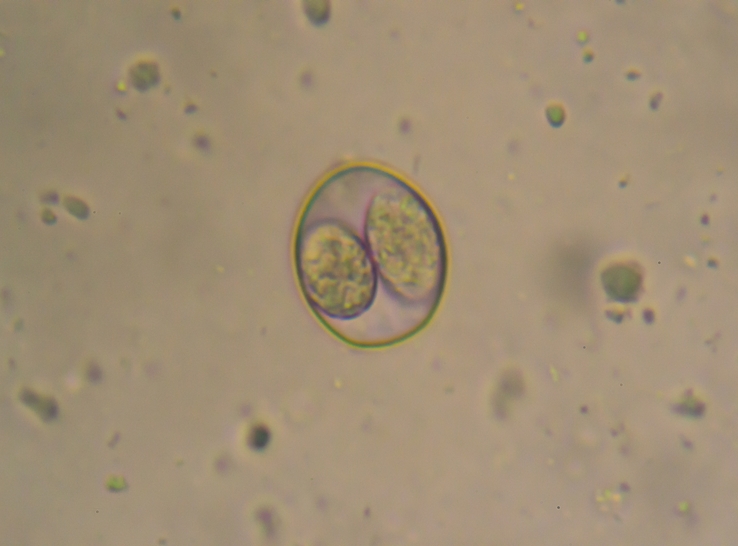
Regardless, actively managing vegetation includes rotational grazing methods to maintain living vegetation on the range. Farms that do not implement rotational grazing programs are more likely to have caked soil, footpad dermatitis and challenges with parasitic infections. A broad diversity of parasitic species has been identified across the US in outdoor-access production, suggesting that region-specific health and range management strategies should be considered to mitigate infections.
Drainage and land gradients are critical considerations for range condition. Puddles from rain events create risks for hypothermia and even drowning, particularly if birds are confined to tractors on pasture and unable to move away from the pooled water. Mud and high ground moisture can also lead to footpad dermatitis, dirty feathers and less ranging behavior.
Bird characteristics
Broilers are increasingly classified as “fast-growing” or “slow-growing.” There is no commonly accepted definition that distinguishes the two categories, but a growth rate of 50 grams per day or less is considered “slow-growing,” and greater than 50 grams per day is considered “fast-growing.”
For outdoor-access systems, several research studies report that slow-growing birds spend more time in the outdoor-access area, range farther, forage more, have lower mortality and display lower prevalences of footpad and hock joint dermatitis, breast blisters and lameness compared to fast-growing breeds.
However, there is high variation within these growth rate categories. Among slow-growing breeds, some are less active and experience higher rates of mortality, footpad dermatitis and breast blisters than others in outdoor systems. There are nuanced, breed-specific effects on behavior and adaptability to outdoor systems beyond growth rate alone.
Conclusion
Scientific evidence supports the conclusion that when birds use well-managed outdoor areas, there are animal-welfare benefits, including more behavioral opportunities, reduced lameness, improved bone condition and lower ascites indexes. However, the quantity of outdoor access varies significantly depending on the label claim.
Insufficient, poorly designed overhead cover and inadequate range conditions not only potentially result in fewer birds accessing the range and experiencing these benefits but also increase the risk of birds’ exposure to higher risk factors for footpad dermatitis, parasites, thermal stress and predation. These factors are also influenced by region-specific geography and climate.
Furthermore, some broiler breeds may not be well adapted to outdoor systems and may subsequently experience higher mortality and poorer health than other breeds.
Outdoor-access management requires that these considerations promote ranging behavior while also promoting animal health. Additionally, tracking animal-based outcomes within each flock, such as the prevalence of lameness, footpad dermatitis and reasons for mortality and culling, can provide insights to continuously improve outdoor-access management practices.
Reference
Campbell YL, Walker Ll, Bartz BM, Eckberg JO, Pullin AN. Outdoor access versus conventional broiler chicken production: Updated review of animal welfare, food safety, and meat quality. Poult Sci. 2025 Apr;104(4):104906.
Editor’s note: The views expressed in this article are solely those of the author. The information is based on a literature review of several studies published by Dr. Pullin in 2025.