



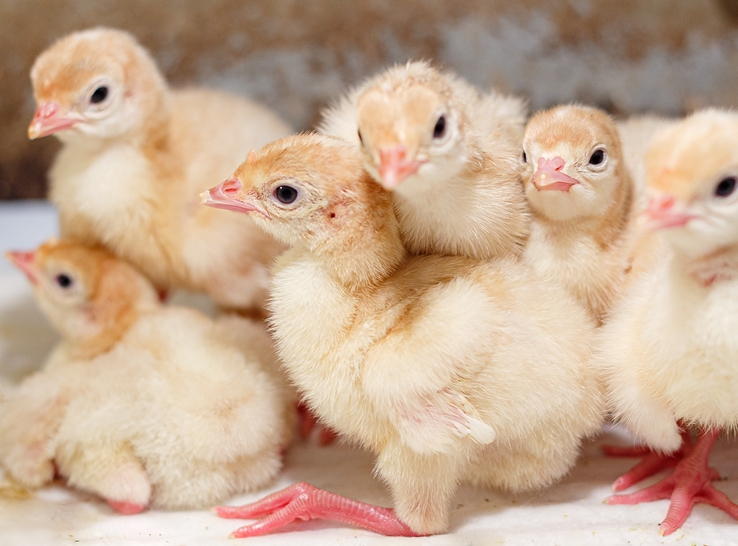
The latest technology providing access to feed and water in hatcheries could change how vaccinations and other general practices are conducted.
“Poults that have access to feed and water are acting and responding differently than poults that don’t,” reported Katherine Schaefbauer, Jennie-O Turkey Store.
“One area being researched is how vaccinations respond in a poult that has feed and water in the hatchery, especially vaccinations that happen at the hatchery and day of placement,” she added.
To find answers, Schaefbauer led a research trial with a coccidiosis vaccine administered to fed and non-fed turkey poults in the hatchery. She presented the results at the 2025 American Association of Avian Pathologists Annual Meeting.
Cocci vaccination use
Coccidiosis is a common digestive disease in young birds caused by a parasitic protozoan that attaches to the intestine and produces oocysts. The oocysts are expelled in feces, which other birds ingest, causing infection. Flocks with coccidiosis can experience high morbidity and mortality from symptoms such as weight loss, lethargy and severe diarrhea.
Prevention efforts include biosecurity and sanitation, coccidiostats in feed and vaccination, typically applied at the hatchery.
“The vaccination stimulates natural immunity, providing lifelong protection,” Schaefbauer said. “In birds, it typically takes two to four cycles for oocysts cycling through the bird’s intestinal system to build immunity.”
Cocci shedding measured in trial
For the trial, the researchers chose to measure cocci shedding rates to determine differences between birds given access to feed and water and birds without access.
The trial was set up with two groups of 60 turkey poults each, all from the same breeder. One group was given coccidiostat-free feed and water on the day of placement at the hatchery. The other group had no access to feed and water.
The research team gavaged the poults to ensure each was vaccinated with one-half dose of a cocci vaccine. Each treatment group had its own floor pen and was held for 12 days. Individual fecal samples were collected daily from day 4 to day 11.
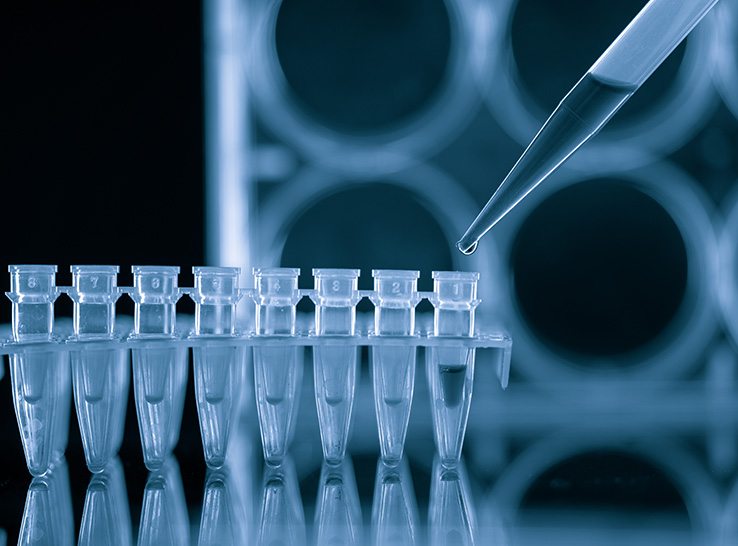
Fecal samples were gathered by placing poults on a chilled cookie sheet to help them defecate and ensure a sample was taken from each. The samples were weighed and prepared for a McMaster slide to count the oocysts.
Key findings
The group of poults with feed and water at vaccination had its highest cocci shedding rates on days 5 to 7. The no-feed group had its highest cycling rates later, on days 8 and 9.
“Their shedding curves are similar, but the plus-feed group has a tighter curve than the no-feed group,” Schaefbauer explained.
Additionally, oocyst shedding levels in the plus-feed group were significantly greater than the oocyst shedding levels in the no-feed group.
“From a farm and production perspective, the birds with access to feed are going to cycle hotter and quicker than birds without access to feed,” she added. “But relatively, they will be cycling at the same time.”