




By Iqra Nazir, PhD candidate
Department of Animal Sciences
Purdue University, USA
Enteric bacterial pathogens such as Salmonella spp. and avian pathogenic Escherichia coli (APEC) continue to be major health challenges in the poultry industry. These infections in poultry lead to poor gut health, reduced feed efficiency, slower growth and increased morbidity and mortality, directly affecting overall productivity.
The situation is further complicated by the rising prevalence of antimicrobial resistance, which can reduce the effectiveness of commonly used antibiotics for disease control and treatment in poultry. When treatments become less effective, infections can last longer, leading to poor flock performance, higher production losses and an increased risk of disease spread. As a result, researchers are increasingly exploring sustainable alternatives that can control harmful bacteria while maintaining bird health and productivity.1,2
Potential of bacteriophages
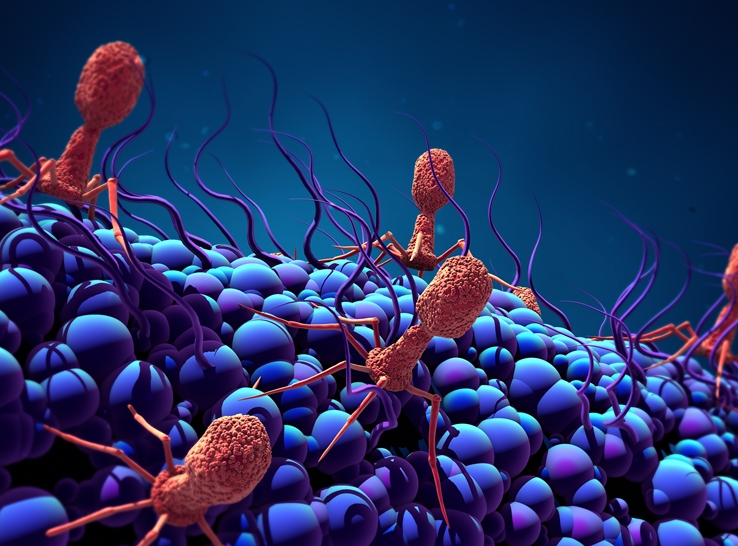
Bacteriophages (or phages), which literally means ‘bacteria eaters,’ are viruses that selectively target and infect bacteria. They are widely distributed in the environment, including soil and water, and are considered the most abundant biological entities on Earth. One of the most attractive qualities of bacteriophages is their high specificity to destroy only the targeted bacteria. Importantly, bacteriophages are generally considered safe for humans and animals.3
Because of these properties, bacteriophages have gained increasing attention as a potential alternative to antibiotics for controlling bacterial pathogens in poultry production. However, the successful application of bacteriophages requires a better understanding of their effects on animal growth and productivity, as any reduction in performance could outweigh the benefits of pathogen control.
Additionally, optimizing delivery methods and evaluating the long-term effects of bacteriophages on animal health and gut microbiome composition are essential for understanding the effectiveness and practicality of phage-based interventions in poultry production.
Study design
With growing interest in bacteriophages as alternatives to antibiotics, we sought to determine whether dietary phage supplementation could influence broiler growth, gut microbial communities and immune response to phages. To address this question, we conducted three experiments:
Experiment #1
We divided 170 one-day-old broiler chickens into five treatment groups:
- Control group: No Salmonella gallinarum challenge and no phage treatment
- Challenge control group: S. Gallinarum challenged, no phage treatment
- Microencapsulated phage cocktail group: S. Gallinarum challenged, treated with microencapsulated phages
- Unencapsulated phage cocktail group: S. Gallinarum challenged, treated with unencapsulated phages
- Mixture of microencapsulated and unencapsulated phage cocktail group: S. Gallinarum challenged, treated with a mixture of microencapsulated and unencapsulated phages
We collected cecal samples before and after bacterial challenge and phage treatment via oral gavage to evaluate changes in the gut microbiome composition.
Experiment #2
In this experiment, we divided 104 one-day-old broiler chickens into four treatment groups:
- Control group: No APEC challenge and no treatment
- Challenge control group: APEC-challenged, no treatment
- Phage-only group: No APEC challenge, phage cocktail only
- Phage-treated group: APEC-challenged, received a mixture of microencapsulated and unencapsulated phages
We collected cecal samples before and after bacterial challenge and phage treatment via oral gavage to evaluate changes in the gut microbiome.
Experiment #3
We used 108 one-day-old broiler chickens in a randomized block design and assigned them to four dietary treatments:
- Control diet: No phage supplementation
- Placebo group: Sodium alginate beads with lysogeny broth
- Salmonella phage group: Diet supplemented with Salmonella Gallinarum phages
- APEC phage group: Diet supplemented with APEC phages
We recorded body weight at weekly intervals (days 7, 14, 21, 28 and 35) and measured feed intake to calculate growth performance parameters, including average daily gain and feed conversion ratio. We also collected blood samples at the same time points to check for antibody production against phages.
Effects on gut microbiome
The gut microbiome plays a critical role in digestion, nutrient utilization and disease resistance. Maintaining a healthy balance of intestinal bacteria is essential for bird health and performance.
Our microbiome analysis revealed that phage treatments (Salmonella Gallinarum or APEC phages) primarily reduced targeted bacterial pathogens while leaving the overall gut microbial community largely unaffected. This finding is important because it indicates that phages can selectively control harmful bacteria without disrupting the normal bacterial populations that contribute to gut health.
We also observed a slight increase in beneficial bacterial genera, including Lactobacillus and Bifidobacterium. These bacteria are commonly associated with improved intestinal health, better production and nutrient utilization.4
Performance, immune response
Our results showed that dietary phage supplementation improved broiler performance throughout the production cycle (7 to 35 days). Birds receiving phage-supplemented diets had better average daily gain and body weight gain compared to birds that did not receive phages.
These findings suggest that phages can support productivity while helping maintain a healthy intestinal environment. Improved growth performance is particularly important as producers seek alternatives that can enhance efficiency without relying heavily on antibiotics.
One concern surrounding long-term phage use is whether birds might develop an immune response against the phages, reducing their effectiveness over time. In our study, repeated exposure to phages (days 7 to 14 and 21 to 28) during the production period did not trigger measurable phage-specific antibody responses, suggesting that phages can be used during a typical broiler grow-out cycle without losing effectiveness due to immune system interference.4
Implications for poultry production
Bacteriophages offer a promising tool to help poultry producers manage bacterial pathogens while supporting bird performance and gut health. Our results demonstrate that phages selectively target harmful bacteria while preserving beneficial microbial populations in the intestine, making them a promising option to reduce antibiotic use while maintaining productivity in commercial poultry production.
Looking ahead, phages may become an important addition to integrated disease-control strategies in modern poultry production. As research continues, phages have the potential to provide producers with a practical and sustainable approach to managing bacterial pathogens, supporting gut health and improving bird performance, while helping reduce reliance on antibiotics.
References
- Van Boeckel, T. P. et al. Global trends in antimicrobial resistance in animals in low- and middle-income countries. Science 365, eaaw1944 (2019).
- Abbas, R. Z., Alsayeqh, A. F. & Aqib, A. I. Role of Bacteriophages for optimized health and production of poultry. Animals 12, 3378 (2022).
- Abd-El Wahab, A. et al. An overview of the use of bacteriophages in the poultry industry: Successes, challenges, and possibilities for overcoming breakdowns. Frontiers in Microbiology Volume 14-2023, (2023).
- Nazir, I. et al. Assessing the impact of phage therapy on growth performance, microbiome and phage specific immune response in chickens. Scientific Reports https://doi.org/10.1038/s41598-026-45338-y (2026) doi:10.1038/s41598-026-45338-y.
Editor’s note: The views expressed in this article are solely those of the author.