



Coordinated management from the pullet farm to broiler placement is key to producing robust day-old chicks capable of achieving their full genetic potential.
Ken Opengart, DVM, PhD, DACPV, said chick quality is built over time, with each production stage either adding to the foundations established earlier or protecting them as the embryo develops and the chick moves through hatch, transport and placement.
“A lot of people look at chicks once they hatch and make a judgment of whether they are viable and high quality,” Opengart said. “The problem is that you’re looking at one point in time and the result of a lot of things that had to happen before that chick hatched.”
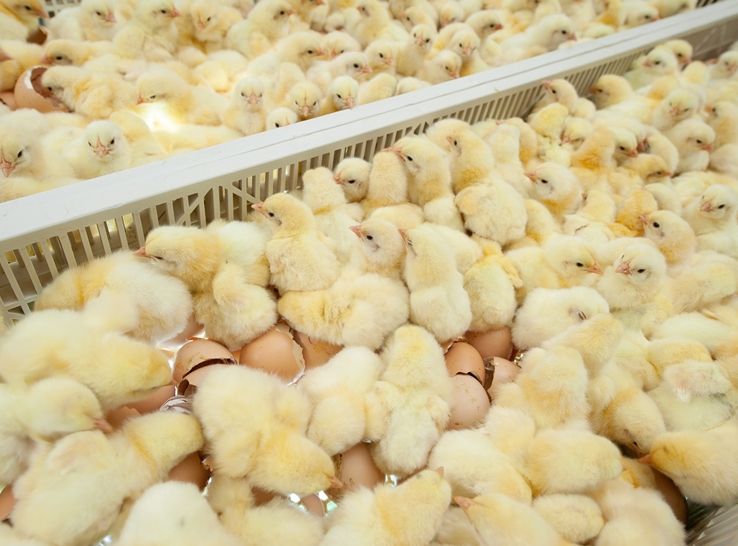
A robust, newly hatched chick should be alert, active, dry and properly hydrated, with a closed navel and comfortable body temperature. It should be ready to adapt to the broiler house and find feed and water after placement.
Meeting those standards cannot solely be a hatchery responsibility, Opengart explained. This is because decisions made on the pullet and breeder farms affect the egg and developing embryo, while incubation, chick processing, transport and brooding influence how much of that potential is retained.
Poor management of pullets, breeders, eggs and incubation can therefore reduce that potential before the chick reaches the broiler farm.
“We’re losing the ability to capture the genetic potential that we’ve spent so much time and effort getting into that egg so that the broiler performs optimally,” he said.
Building foundations in pullet and breeder flocks
On the pullet farm, Opengart said flock uniformity is one of the most important factors in producing a good breeder flock and, ultimately, robust chicks.
Maintaining that uniformity and managing body weight remain important once the birds move to the breeder farm, as a flock can be uniform but still be uniformly too heavy or too light.
“If hens get too heavy, their production goes down. If they’re too light, they’re not able to produce as well,” he said. “Even when diets are formulated correctly, you need the right quantity getting to the birds and to make sure every bird gets fed.
“It’s about feed delivery and presentation, making sure every bird has an opportunity to eat what it needs, and monitoring that very closely.”
Alongside uniformity and weight management, vaccination programs help protect the pullet and future breeder while establishing maternal immunity that will later be passed to the chick, he added. Together, breeder health, vaccination, nutrition and flock uniformity influence the maternal protection, nutrients and embryonic potential contained within the hatching egg.
Protecting hatching-egg quality
Once the egg has been laid, the focus shifts to preserving what has been produced, particularly by collecting hatching eggs on time, minimizing floor eggs, maintaining a high-quality egg pack and maintaining the correct temperature and humidity during egg storage and transport.
If hatching eggs become too warm, embryos can begin developing before planned incubation, and poor environmental control can also cause eggs to lose too much water or sweat, increasing the chance for bacterial contamination.
However, the resulting problems might not become visible until incubation or hatch, making it easy to assume they originated in the hatchery.
“If the hatch window becomes too wide, it’s important to determine whether the primary cause is on the farm or in the hatchery,” Opengart said.
“Similarly, if there is a high level of bacterial contamination present, a thorough investigation should be conducted to determine if the source of bacteria is the farm, or if the challenge is broader and linked to hatchery sanitation issues.”
Finding the specific cause of a problem requires operations teams to consider the entire process, look beyond the stage where the problem becomes visible and recognize that every department shares responsibility for producing a robust broiler chick, he added.
Controlling the hatch window
Although every stage contributes to chick quality, Opengart said errors during incubation and hatch tend to have the most immediate and obvious effects.
“The hatch window is the time from when the first chick hatches to when the last chick hatches in a hatcher, and ideally you want them all to hatch as close to one another as possible,” he said.
If the window becomes extended, early-hatching chicks can remain in the hatcher too long and become dehydrated, while late-hatching chicks may still be wet when the flock is pulled.
“Late hatching chicks can get chilled and stressed, and their navels won’t be closed, so they’re more prone to infection,” he said. “The more consistent and shorter the hatch window, the closer they all are to ideal, where they have lost the right amount of moisture throughout the incubation and hatch process.
“Relative to robust chicks, that hatch window is where you’re going to make it or break it.”
Managing the move from ‘quiet to chaos’
After about 18 days in controlled incubation conditions, embryos enter what Opengart describes as a rapid transition from “quiet to chaos.”
Hatching eggs are handled and vaccinated in the latter stage of embryonic incubation, at about 18 days. Within a couple of days, chicks begin hatching, using considerable energy to break through and free themselves from the shell in an environment where dust and dander from the hatch process begin to build.
“Once chicks leave the hatcher, they move through a series of events in a very short period. They are separated from the shells, conveyed, counted, placed into chick boxes, vaccinated, held at the hatchery and transported to the farm, typically within about 12 hours of hatch.
“Once placed, they must quickly acclimate to a new environment and locate feed and water. Considering everything these chicks experience in such a compressed period, their resilience is remarkable.
“It also reinforces just how important it is that we do everything possible throughout the production process to produce a robust chick that is prepared to successfully navigate these early-life challenges,” he added.
Minimizing stress during this period is particularly important because chicks have limited resources to divide among maintaining normal body functions, supporting immunity and growing.
Opengart explains the relationship using “Bernie’s triangle,” a model named after his former professor, Dr. Bernie Gross. When conditions are stable, resources are available for all three functions, but disease or environmental challenges increase the demands in one area and leave less available for the others.
“If the environment is too cold, for example, and the bird has to burn more calories to maintain its core temperature, there’s less available for growth,” Opengart said. “If you’re chilled and you have a disease challenge, resources directed toward growth are greatly diminished.”
Standardizing stages
To improve consistency, Opengart recommends bringing together the people responsible for breeder production, hatchery operations and live production to map the process from pullet rearing through to broiler placement.
“The approach I’ve always taken is to have the team write standard operating procedures (SOP) for every part of that process,” he said.
SOPs create a consistent approach and expectation across departments and provide a benchmark managers can use to assess implementation and results.
“If the process is standardized and you see results that are different from what you expect, it’s easier to go back and find where the deviation was than if you’re doing five different things,” he said.
Companies also need a shared measure of success, which could include hatchability, chick quality or 7-day broiler mortality, so teams focus on the final result rather than only their own part of production.
“It’s important for everybody to recognize that they have part of that responsibility, whether they see it or not,” Opengart said. “They need to understand that they’re working together for a common goal, not just managing their little part of the process.”
Ultimately, each department has an opportunity to build or protect chick quality, but it cannot necessarily restore potential lost earlier.
“Each step can either preserve the genetic potential within that chick or begin to erode it,” Opengart said. “Once you lose something, it’s hard to recapture what you’ve lost. You can only maintain what you’ve got at that point and move that forward.”
How each stage of production contributes to chick quality
| Production stage | Main role | Key management points |
| Pullet farm | Build the maternal foundation | Uniformity, body weight, flock health and vaccination |
| Breeder farm | Build the egg and maternal protection | Feed management, breeder health, egg uniformity and shell quality |
| Hatching-egg management | Protect the developing embryo | Temperature, humidity, sanitation, handling and transport |
| Hatchery | Develop a robust chick | Incubation control, a tight hatch window, sanitation, vaccination and hydration |
| Chick handling and transport | Protect chick quality | Biosecurity, temperature control and minimal handling stress |
| Broiler placement | Allow the chick to thrive | Correct brooding conditions, suitable litter and immediate access to feed and water |
Editor’s note: Content on Modern Poultry’s Industry Insights pages is provided and/or commissioned by our sponsors, who assume full responsibility for its accuracy and compliance.