

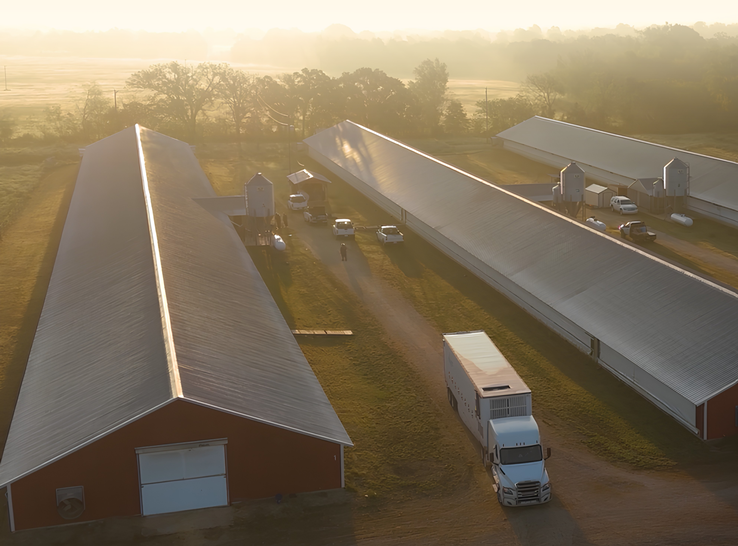


Heat stress affects poultry farms everywhere — even in Canada, where poultry producers battle hot, humid conditions in the summer.
“Heat stress is not only a problem in the tropics but also in temperate climates,” stated Deborah Adewole, PhD, associate professor, University of Saskatchewan.
“Broiler chickens are particularly sensitive to hot temperatures due to their rapid growth rates and limitations in dissipating heat,” she said. Feathers, a lack of sweat glands and relatively high stocking densities limit body temperature regulation.
The impact of heat stress on broilers is well researched. Among the many symptoms are reduced feed intake and weight gain, a suppressed immune system and increased skeletal muscle damage.
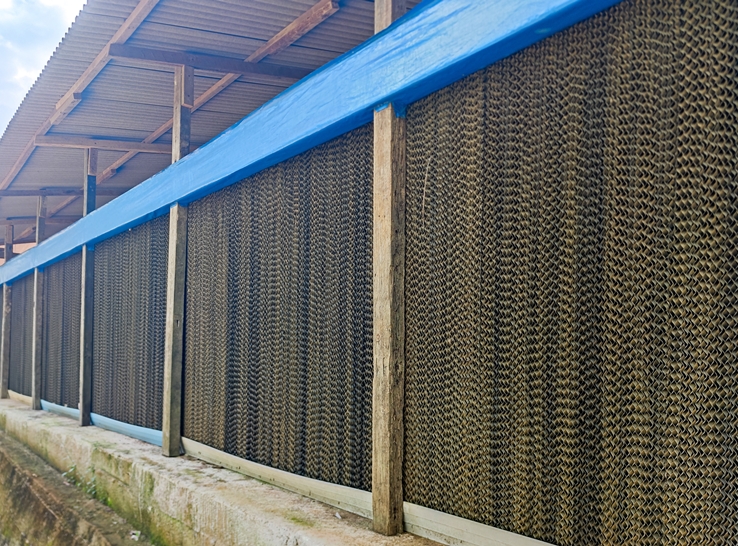
“Strategies to reduce the effects of heat stress must be holistic and multi-factorial because so many factors contribute to it,” Adewole added. “Housing, ventilation, environmental control, litter management, genetic selection and nutrition are some of those factors.”
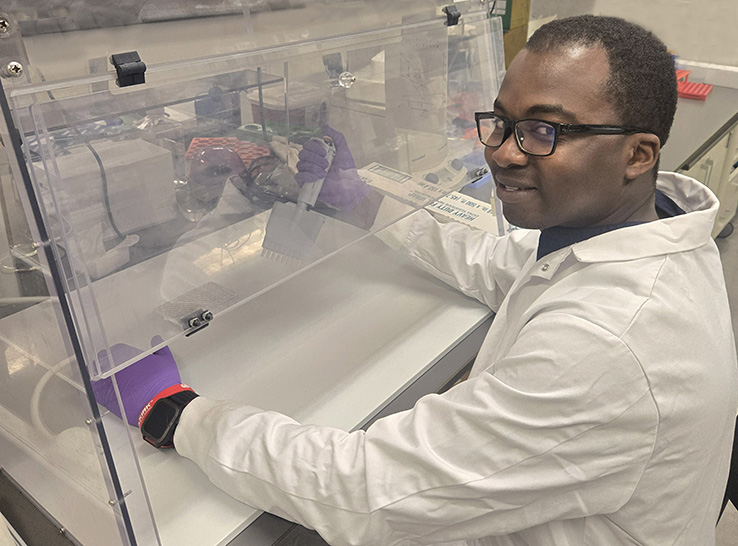
In her recent work, Adewole focused on nutritional strategies to reduce heat stress. She discussed her research in a webinar hosted by Canadian Poultry.
High energy density, vitamins improve performance
“Because heat stress decreases feed intake, one nutritional strategy is to increase energy density and nutrition in diets so that chickens have adequate energy supplies,” Adewole said. “In our lab, high energy density consistently reduced the feed-conversion ratio throughout the rearing period.”
They also found higher jejunum villus height, indicating better absorption of the high-energy diet and nutrients.
Other studies have reported that increasing energy up to 200 kcal/kg in diets improved the performance, nutrient digestibility and carcass traits of heat-stressed broilers, Adewole said. Dietary vegetable oils added to diets at 4.5% to 7.5% also improved production performance during heat stress.
Adding vitamins such as A and C also demonstrates value during heat stress in research trials. The vitamins act as destressors, antioxidants and immunomodulators in chickens. Another trial of vitamin A and zinc added to broiler diets revealed that the combination of both significantly increased carcass parameters, such as feed conversion and live-weight gain.
Search for antibiotic substitutes
Adewole conducted several studies with phytogenic feed additives in search of an alternative to antibiotics. She used brown seaweed meal and extract, grape pomace and red osier dogwood extracts in her research.
She first tested seaweed meal at 1 mL/L and 2 mL/L in broiler diets with 2% seaweed extract in the water. Then she compared them to a control group with no additives. Heat stress occurred at temperatures ranging from 90° F to 93° F (32° C to 34° C) for 8 hours a day, from 21 to 27 days of age. The thermoneutral groups were kept at 75° F (24° C). Growth performance was measured on days 7, 14, 21 and 28, and gut tissue was taken on day 28.
“On day 28, adding seaweed and seaweed meal in the diet significantly increased feed intake and average bodyweight compared to control,” Adewole said. “This is irrespective of the heat-stress challenge.
“The seaweed also modulated the gut microbiome,” she added. “The 2% seaweed meal and extract significantly increased some bacteria that are very important to the health of the chickens, like Lactobacillus.
“Heat stress also compromises the function of the small intestine to absorb nutrients by reducing the height and weight of the villi. We found that seaweed meal and extract significantly increased the villus height in heat-stressed chickens.”
Grape pomace, red dogwood tests
Adewole also studied the use of grape pomace (the discarded skins, seeds, stems and pulp from winemaking) and an extract from red dogwood, which is known for its antioxidant and anti-inflammatory properties. She compared the grape pomace at 2.5% and the red dogwood at 0.3% to the antibiotic bacitracin methylene disalicylate (BMD) at 0.05% and a control group.
Overall, BMD produced the best results for growth performance before and after heat stress. When examining blood parameters, creatine levels that were reduced during heat stress increased with both BMD and red dogwood. BMD also increased antioxidant capacity in chickens under normal conditions.
“The ileal microbiome was modulated by our treatments. Among the treatments, BMD performed the best with increasing the abundance of some microorganisms,” Adewole said. “In the ceca microbiome at the genus level, BMD and grape pomace significantly increased the abundance of some bacteria irrespective of heat stress. Overall, BMD performed best, followed by red dogwood.”
When examining the villus-height-to-crypt-depth ratio in the intestine, feed additives all performed well, especially under heat stress. “BMD, red dogwood and grape pomace repaired the negative effects of heat stress,” she related. “They increased intestinal absorptive capacity.”
Antioxidant additives against cold stress
“It’s well known that young chickens are less able to handle cold stress than others,” Adewole reported. “Cold stress can impact meat quality, immunity, disease susceptibility and growth. Although grown in controlled environments, there are conditions when cold stress will be an issue, such as power outages, extreme weather and heating issues.”
In a research project, Adewole studied how an antioxidant feed additive protected young broilers against cold stress. The microencapsulated additive known as P(BF+AOx) has performed well as a dietary supplement by improving immune response. But it had not been tested against cold stress.
The study involved two groups of 96 broilers — a cold-stress group and a thermoneutral group. Each group was split, with half receiving the feed additive and the other half serving as a control. The cold-stress group was housed at 68° F (20° C) for 48 hours and 8 to 10 days of age. The thermoneutral group was kept at 84° F (29° C). Growth performance parameters were taken from 0 to 21 days.
“The supplement did improve bodyweights of chicks in all groups and improved feed conversion,” Adewole said. “Chickens under cold stress lack antioxidants, which affects immunity. The supplement significantly increased antioxidants during cold stress.
“Feeding P(BF+AOx) at 0.015% could provide a novel approach for improving gut health and early life growth performance in broiler chickens,” she concluded.