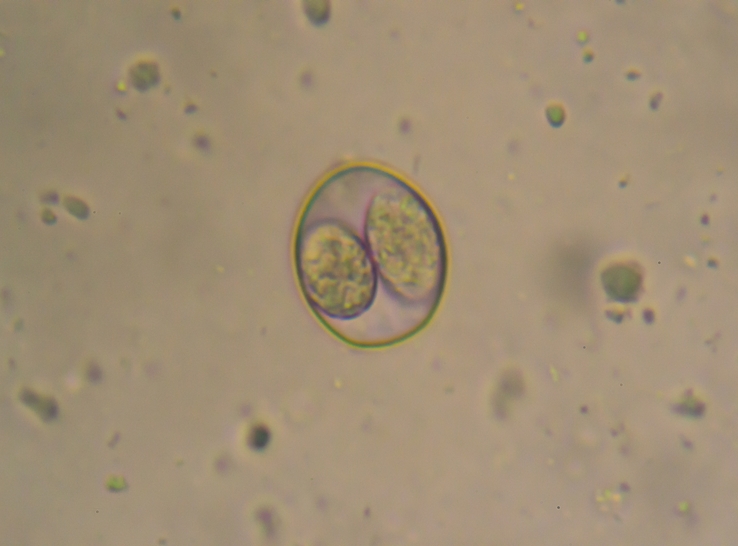






Coccidiosis is the poultry industry’s most economically damaging disease. As such, producers are often seeking new management approaches and products to bring into the rotations that reduce the risk of resistance from the Eimeria parasites, which cause the condition. In an interview with Vasil Stanev, DVM, MBA, global director of technical services poultry nutrition and health at Phibro Animal Health, he explains how the company’s divalent anticoccidial feed additive fits into this picture.
What does Avatec® (lasalocid sodium) bring to coccidiosis-rotation programs?
VS: In a word: diversity. In-feed anticoccidials remain the most effective tool to control coccidiosis,1 but prolonged use of any one product can lead to reduced efficacy as Eimeria sensitivity declines. This loss of sensitivity often affects other anticoccidials with similar chemical structures.2 Ionophores fall into three classes, and cross-resistance is most common within—but not between—classes. So, if salinomycin is used, resistance may also develop to narasin and monensin, all monovalent ionophores. In contrast, lasalocid, the only divalent ionophore, is largely unaffected by this.
To preserve efficacy, rotating products from different classes via full or shuttle programs is essential.3 Lasalocid adds value to such rotations due to its distinct chemistry, and because it has historically been used less than monovalent ionophores, field Eimeria often shows greater sensitivity to it.4 This makes it an important option for maintaining long-term coccidiosis control.
You mentioned full and shuttle rotation programs. What is the best way to use lasalocid?
VS: Lasalocid is effective against all major Eimeria species in poultry. Choosing between full and shuttle programs depends on infection pressure and grow-out length. For lower pressure and shorter cycles (up to 4 to 5 weeks), it is best used in a full program, from placement to withdrawal. For higher pressure or longer grow-outs (over 35 to 42 days), a shuttle program is recommended. In shuttle programs, lasalocid can be used in either the starter (0 to 3 weeks) or grower phase (3 to 6 weeks), paired with a synthetic such as robenidine or decoquinate in the alternate phase.
This additive has not been used as intensively as other in-feed anticoccidials. Why is that?
VS: Market conditions and usage practices vary significantly across regions, and this helps explain differences in use over time. In some markets, lasalocid has historically been included more consistently in coccidiosis control programs than in others. Years ago, some markets reported performance concerns when this feed additive was used at higher inclusion rates (105 to 125 ppm).
Importantly, at recommended inclusion levels of 75 to 90 ppm, lasalocid has consistently demonstrated excellent safety and efficacy, with no negative impact on bird performance observed. Anticoccidial sensitivity tests (ASTs) have shown that it performs consistently better than many other ionophores in maintaining anticoccidial effectiveness. In fact, lasalocid remains one of the most effective ionophores available for coccidiosis control.
Do producers need to adjust electrolyte levels when using lasalocid?
VS: Lasalocid differs chemically from monovalent ionophores and has a distinct ion affinity. At the higher dose of 125 ppm, it’s important to maintain electrolyte balance (Na+K–Cl) within 172 to 240 mEq/kg.5 This aligns with typical diets, but in some cases, reducing sodium (and possibly potassium) while keeping chloride 20% to 40% higher than sodium may be necessary. There is no need to modify electrolyte levels between 75 and 90 ppm.
Are there any seasonal considerations when using this feed additive?
VS: Lasalocid offers year-round flexibility for broiler producers, unlike monensin or nicarbazin, which are often avoided in warm weather. It is particularly popular in summer, as it doesn’t reduce water intake.
In cooler seasons, when lower water intake may be beneficial, Na and K can be reduced—typically to 0.15% and 0.8% to 0.9%, respectively. Calcium levels also matter; major genetic suppliers now recommend lowering Ca to improve nutrient use and reduce water loss. When enzymes like phytase are included, mineral contributions must be accounted for to prevent excess mineral intake, which can increase water excretion.
Today, producers using a coccidiosis vaccine often want to supplement it with an in-feed anticoccidial. Can lasalocid be used in these so-called hybrid programs?
VS: Definitely. For immunity to develop, vaccinal Eimeria must complete its life cycle in the bird’s gut, which can cause tissue damage and invite secondary infections. To manage this after 18 to 21 days, producers often use low-dose ionophores—a bio-shuttle approach. A Southern Poultry Research Group study showed that broilers vaccinated in ovo and fed lasalocid at 75 ppm from day 18 to 35 or 50 showed at least a 3-point feed conversion improvement over vaccinated-only birds, while maintaining coccidial immunity.6
Does using lasalocid in broilers present any export barriers?
VS: Not anymore. Major regions, including the EU and Japan, have set maximum residue levels (MRLs) for lasalocid in poultry, and the UN’s Food Code supports international trade by listing lasalocid MRLs. Studies show lasalocid depletes quickly after it is withdrawn, and when the withdrawal time is followed.
Editor’s note: Content on Modern Poultry’s Industry Insights pages is provided and/or commissioned by our sponsors, who assume full responsibility for its accuracy and compliance.
1 Noack, S., Chapman, H.D, and Selzer, P.M., (2019), Anticoccidial drugs of the livestock industry, Parasitological research, 118:2009–2026.
2 Chapman, H.D., (1997) Biochemical, genetic and applied aspects of drug resistance in Eimeria parasites of the fowl, Avian Pathology, 26:2, 221-244.
3 Peek, H.W., and Landman, W.J.M. (2011) Coccidiosis in poultry: anticoccidial products, vaccines and other prevention strategies, Veterinary Quarterly, 31:3, 143-161.
4 Stanev, V., Naciri, M., Niepceron, A., Fort, Genevieve., & Vancraeynest, D. (2013). Efficacy of anticoccidial drugs in broilers – based on anticoccidial sensitivity tests in the period 2000-2012. Proceedings of the 19th European Symposium on Poultry Nutrition.
5 EFSA FEEDAP Panel. (2022). Scientific Opinion on the safety and efficacy of a feed additive consisting of lasalocid A sodium (Avatec® 150G) for chickens for fattening and chickens reared for laying (Zoetis Belgium SA). EFSA Journal 2022; 20(12):7715, 14 pp.
6 Mathis, G., Schaeffer, J., Cookson, K., Dickson, J., LaVorgna, M., & Waldrip, D. (2014). Effect of lasalocid or salinomycin administration on performance and immunity following coccidia vaccination of commercial broilers. Journal of Applied Poultry Research, 23(4), 577-585.