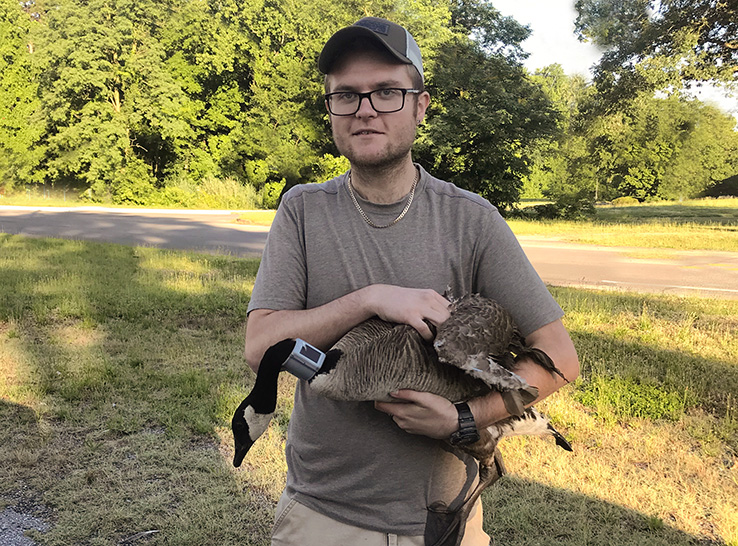


Geese and poultry disease: tracking migration timing, HPAI risk
By Matthew J. Hardy, MSc
AgriNerds – Co-owner, Waterfowl Biologist and Co-director of Ecological Modeling
Chester County, Pennsylvania

By Matthew J. Hardy, MSc
AgriNerds – Co-owner, Waterfowl Biologist and Co-director of Ecological Modeling
Chester County, Pennsylvania

Airborne bacteria and viruses that cling to the dust in poultry houses pose substantial health risks. Lingying Zhao, PhD, agriculture air quality specialist and Extension educator at The Ohio State University, discussed her insights on dust mitigation and collection during a May 2025 webinar sponsored by the University of Georgia.

Questions remain around the transmission of highly pathogenic avian influenza into and within poultry houses, but the infectious nature of the virus is its biggest weapon, according to a USDA expert.

Technology is part of everyday life in a poultry house, and it has helped the industry achieve production goals efficiently, sustainably and with more speed than imagined. But with these technological advances, animal agriculture is on the cusp of a major change.

Enterococcus cecorum was first reported in the US in 2009. Disease caused by this pathogen poses considerable welfare and economic challenges for broiler producers and currently has no effective antibiotic-free treatment. For the past 15 years, Mitsu Suyemoto, research specialist at North Carolina State University, has conducting pioneering research on this emerging pathogen with Luke Borst, DVM, PhD. Of note, their team developed many of the key assays used to study E. cecorum today.

Research led by Phillip Yeboah, PhD candidate at North Carolina State University examined autofluorescence as a method for determining whether Eimeria oocysts are viable and capable of causing infection.

Adding organic acids to poultry drinking water has been suggested as a potential intervention in managing Salmonella, but research by Auburn University scientists showed otherwise.

Brian Jordan, PhD, associate professor at the University of Georgia joined T.J. Gaydos, DVM, and Rodrigo Gallardo, DVM, PhD, as panelists in a webinar from the AAAP. They discussed the challenges and promises of IBV serotyping with qPCR and sequencing.

Infectious coryza, a bacterial upper respiratory disease, is on the rise in the US. Avibacterium paragallinarum, which is a primary pathogen of chickens causing coryza, spread from southern states to Pennsylvania in 2018, followed by Ohio, Iowa and other northern states.

A North Carolina State University study, led by graduate student Athena He-DeMontaron, compared the growth performance and mortalities of fast- and slow-growing strains of broilers reared in silvopastures, which provide a natural habitat with trees, shrubbery and vegetation and indoor facilities. How did these systems impact the different bird strains?

By Ken Opengart, DVM, PhD, DACPV
3 Birds Consulting
Signal Mountain, Tennessee

By Shreeya Sharma
Graduate research assistant
Department of Animal and Veterinary Sciences
Clemson University