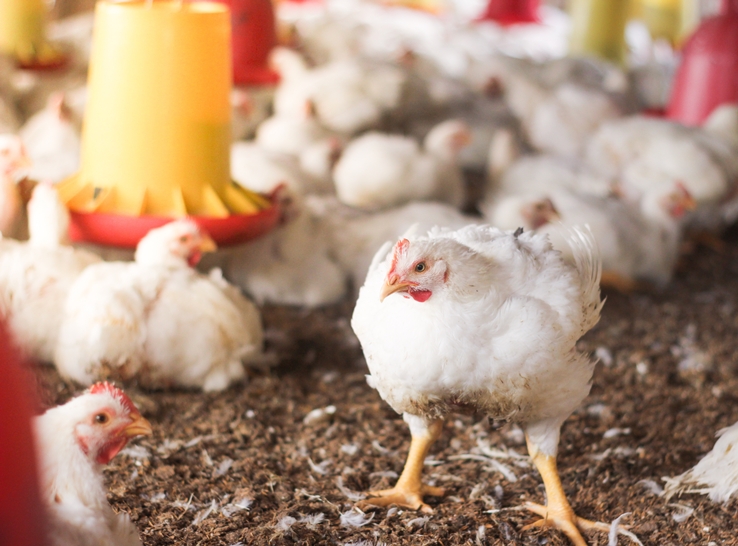


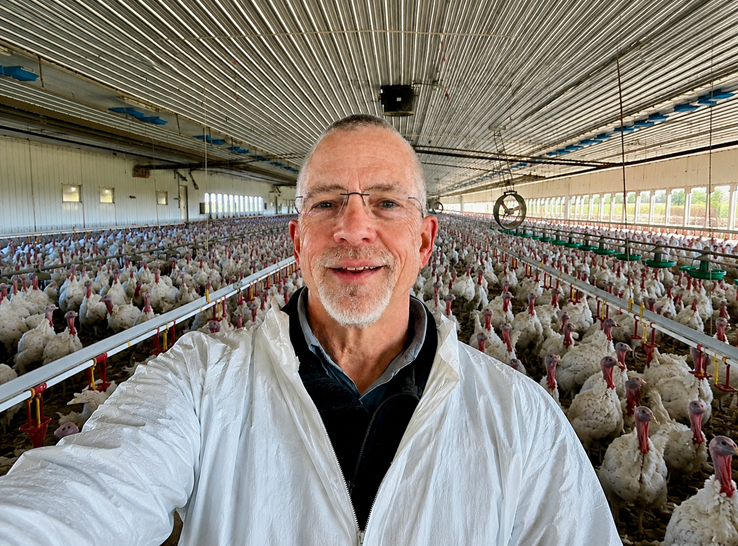



At the 2025 Poultry Science Association annual meeting, Carria Xie, PhD student, University of Sydney, posed a question to the audience: “The biggest goal in the broiler industry is to increase performance, but how exactly do we go about doing that?”
One possibility is on-farm hatching to reduce biosecurity and sanitation risks associated with transporting newly hatched chicks, Xie noted. On-farm-hatched chicks also have immediate access to food and water.
Xie and a team of university researchers developed a trial to compare growth performance and feed efficiency of chicks hatched on the farm and in conventional hatcheries.
Hatching trial details
The trial involved 560 straight-run Ross 308 birds, divided into two hatching treatments: on-farm and in-hatchery. Each treatment had eight replicates with 35 birds per replicate. Assuming 87% hatchability, 360 eggs were purchased from a commercial hatchery on day 18 of incubation and transported in a climate-controlled truck to the university’s poultry research facility.
The eggs were placed in a floor pen with 2½-inch-deep litter. Room temperature was maintained at 93° F (34° C) and above 35% relative humidity.
On day 21 of incubation, 280 chicks (from the same breeder flock as the other chicks) were hatched in the conventional hatchery and transported to the university facility.
All the chicks were sorted by hatching method and randomly allocated to one of 16 floor pens. The chicks were fed standard wheat and soybean meal diets in three phases: starter, grower and finisher.
Bodyweight and feed intake were recorded on days 14, 28 and 39. Feed-conversion rates (FCR) and bodyweight gain were calculated for each feeding period.
Bodyweight similar, FCR higher
“Initial performance at day 0 was very promising,” Xie said. “Birds hatched on-farm with immediate access to feed and water were 6 grams heavier than birds hatched in a conventional hatchery.
“Unfortunately, at the end of the starter phase, birds were no longer significantly different in bodyweight,” she continued. “But birds hatched on-farm were numerically heavier. They ate more feed than birds hatched conventionally, leading to higher FCRs.”
At day 28, on-farm-hatched birds had higher bodyweight, but cumulative performance showed no significant differences in growth rate.
At day 39, hatching method did not significantly impact bodyweight or bodyweight gain. However, FCR for on-farm-hatched birds was significantly higher.
Positives for on-farm hatching
“At the start of the trial, birds hatched on-farm were numerically heavier and continued throughout the trial,” Xie said.
“Why is this important?” she continued. “Early growth performance is critical because it sets the foundation for overall performance, productivity, gut health and uniformity. Weight at day 7 is strongly correlated to final market weight.”
Xie said that, compared to typical breeder performance objectives, both treatments in this trial were higher.
“There’s always some performance you can gain, provided that the birds are not stressed or hungry,” she said. “Chicks that start off strong are likely to stay consistent throughout production.
“What this means is that even though on-farm hatching requires specialized equipment, it’s a viable way to start broiler chicks so they have immediate access to feed and water, helping them grow faster and better,” Xie concluded.