

UGA’s Maricarmen Garcia to address ILT breaks at AAAP webinar
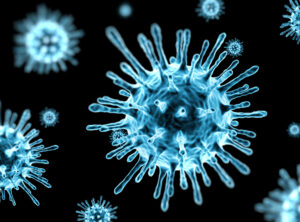
To help the industry improve control programs for infectious laryngotracheitis virus (ILTV), the AAAP hosted a webinar, “Recent Outbreaks of ILT: What Have We Learned?”


To help the industry improve control programs for infectious laryngotracheitis virus (ILTV), the AAAP hosted a webinar, “Recent Outbreaks of ILT: What Have We Learned?”

Utilizing postbiotic feed additives in poultry diets could help producers find customized solutions to challenges facing the poultry industry, according to an expert in poultry gut health.
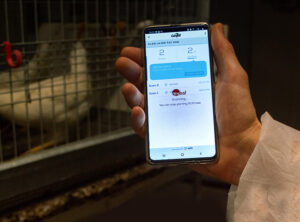
Cargill has introduced REVEAL™ Layers, a non-invasive near-infrared (NIR) technology that helps producers and nutritionists make real-time decisions regarding hens’ diets to support their flocks’ long-term production and performance.
Boehringer Ingelheim has announced the launch of Vaxxilive® Cocci 3, a poultry coccidiosis vaccine previously known as Hatchpak® Cocci III.
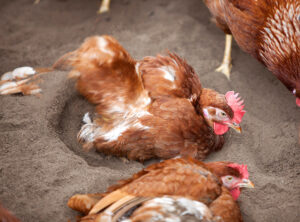
Newer systems for laying hens provide more space for them to express natural behaviors such as scratching, pecking and dustbathing, which could have some biological benefits.
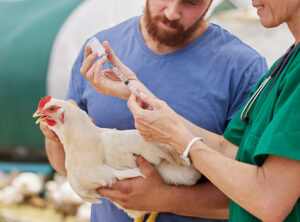
The National Chicken Council recently developed a Q&A on vaccines to help veterinarians, producers and others involved in live production educate their families, friends and communities about their usage in poultry production.
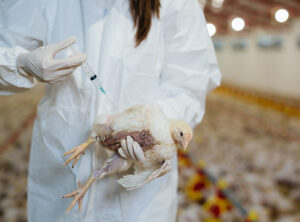
Vaccination is key to managing fowl cholera in poultry. For a program to be successful, however, it’s critical to train vaccination crews to monitor vaccine “takes” or major cutaneous reactions within a flock — no easy task with today’s employee shortages and rotating vaccination crews.
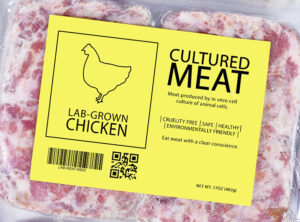
In June 2023, the USDA Food Safety Inspection Service (FSIS), approved the sale of cell-cultured (sometimes called “lab-grown”) chicken by two California companies.
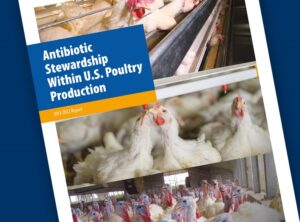
Updated research supported by the US Poultry & Egg Association quantifying the US poultry industry’s on-farm antibiotic use shows further improvements in antibiotic stewardship and commitment to disease prevention within poultry production.

Multi-stage egg-incubation systems are challenging to manage. And too often, attempts to keep late-stage embryos from overheating create situations where early-stage embryos are at sub-optimal temperatures during critical developmental periods.
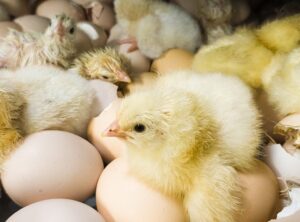
Hatchery sanitation is a continual issue in commercial poultry and has become a focus since the removal of antibiotics in production, according to Brian Jordan, PhD, associate professor at the University of Georgia.

Poultry scientists are working to better understand the impacts of particulate matter (PM) on bird health and production.