
Category: Sponsor Spotlight

Import license for avian metapneumovirus vaccine offers new tool for producers

Faced with the emerging disease threat posed by avian metapneumovirus (aMPV), the USDA is allowing the importation of three vaccines from Boehringer Ingelheim: the live virus products NEMOVAC™ for use in chickens and AVIFFA RTI for use in turkeys and chickens, as well as the TUR-3 inactivated vaccine for primary vaccination of both turkey and chicken flocks against aMPV subtype B.

Why measuring emotion in poultry matters

As animal welfare science has evolved, the importance of using animal-based measures to study welfare has become apparent. Birds may have needs and feelings that aren’t immediately obvious to humans, and their priorities are influenced by an evolutionary history that is vastly different than our own.

Beyond protection: How vaccines are shaping the poultry microbiome

The poultry gut is more than just a digestive organ — it’s a dynamic ecosystem that plays a critical role in bird health, disease resistance and overall performance. As the industry continues moving beyond blanket antibiotic use, producers and researchers alike are zooming in on the gut microbiome and how to manage it more effectively.

Unwanted roosters: Is in-ovo sexing the answer?

For every laying hen that is hatched, approximately one male counterpart also hatches. However, as roosters do not produce eggs, they are typically culled, or euthanized, at hatch. However, the culling of these day-old male chicks raises ethical concerns.

IBV types in the Americas and the next threat to commercial poultry in the US

Controlling IBV through vaccination requires knowledge of the circulating field strains. For this reason, surveillance is critical. Mark W. Jackwood, PhD, and Jose Linares, DVM, describe Ceva’s Scientific Support and Investigation Unit that uses real-time quantitative RT-PCR panels to rapidly detect multiple IBV types.

Feeder management: A vital part of broiler welfare

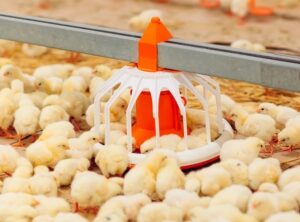
Feed is a vital part of the poultry industry, representing around 60-70% of the total costs. However, even the best feed formulation cannot deliver results if the birds cannot access it readily. Anusha Gautam and Bethany Baker-Cook, PhD, Auburn University, discuss the right type of feeders to select for each of the production phases, appropriate feeder spacing, proper feeder height, and the overall feeder arrangement.

[random-sponsor]