
Category: Silver

Novel PCR assay differentiates among aMPV subtypes in single test

In the poultry sector, avian metapneumovirus (aMPV) infections can lead to severe economic repercussions, manifesting as drops in egg production and increased mortality, which lead to costly veterinary interventions and biosecurity measures. Researchers described the development of an assay, which was found to be capable of concurrently detecting and distinguishing among aMPV-A, aMPV-B and aMPV-C.

Considerations for cage-free pullet management

Currently, 38.7% of laying hen housing systems in the United States are cage-free and this transition continues to increase. However, little attention has been given to pullet housing systems. In this article, Richard Blatchford, PhD, University of California, Davis, provides important considerations for pullet management.

No easy answers for preventing gangrenous dermatitis outbreaks

Known for high mortality and low morbidity, gangrenous dermatitis (GD) continues to evade answers as researchers investigate potential stressors that trigger an outbreak. Matthew Jones, DVM, Southern Poultry Research Group led a panel of poultry professionals that included Don Ritter, DVM, Chuck Hofacre, DVM, Mark Burleson, DVM, and Carrie Cremers, DVM, to discuss field experiences that helped control GD.

Feeder management: A vital part of broiler welfare

Feed is a vital part of the poultry industry, representing around 60-70% of the total costs. However, even the best feed formulation cannot deliver results if the birds cannot access it readily. Anusha Gautam and Bethany Baker-Cook, PhD, Auburn University, discuss the right type of feeders to select for each of the production phases, appropriate feeder spacing, proper feeder height, and the overall feeder arrangement.

Beak trimming of hens: Practices, welfare concerns and alternatives

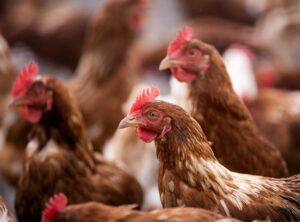
Beak trimming is common in the management of laying hens, involving the removal of a portion of a bird’s beak to minimize harmful behaviors. While beak trimming helps reduce injuries among birds, the technique has also raised animal welfare concerns. Thus, farmers and researchers are continuing to explore ways to manage hens without the need to trim their beaks.

[random-sponsor]