




Research on the microbiota in chicken reproductive tracts revealed an abundance of live bacteria, including strains typically found in the gut, according to Nir Ben Porat, Hebrew University of Jerusalem student.
“When we talk about microbiota, we usually think about the gut or the skin,” Ben Porat said. “To our surprise, we found viable bacteria right where the egg forms.
“We recovered 145 unique bacterial strains in combined samples from the infundibulum, magnum and shell gland regions of the reproductive tract,” they continued. “This raises the possibility that some of these bacteria might be transferred into the egg and reach the developing embryo.”
The research and results were presented by Ben Porat at the 2025 Poultry Science Association annual meeting.
Research details
“The aim of our study was to determine whether live symbiotic bacteria, rather than just bacterial DNA, were present in the reproductive tract of the chicken,” Ben Porat explained.
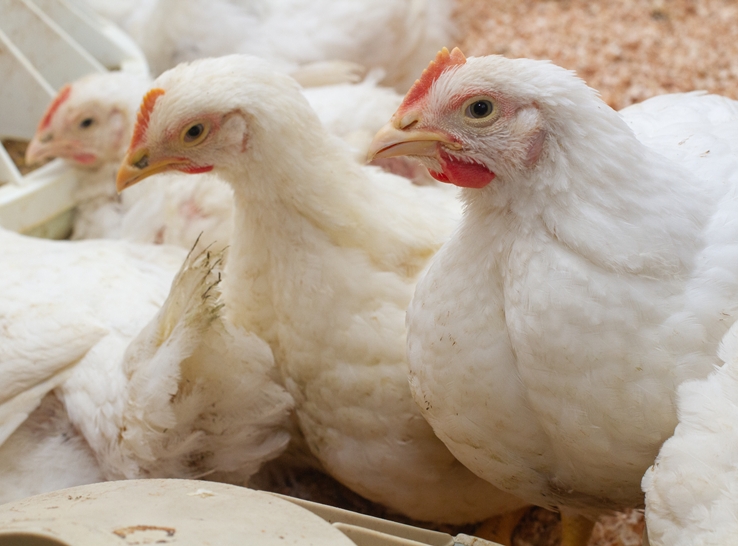
Using 10 Cobb broiler breeders at 37 weeks of age, the research team took samples from three regions of the reproductive tract: the infundibulum, magnum and shell gland.
The samples were placed on an aerobic agar and incubated for 3 days.
A substantial number of the colonies grew from all three regions. Researchers collected the colonies and performed 16s rRNA sequencing, which helps identify bacteria and analyze bacterial diversity in microbiomes.
The results produced 145 unique bacterial strains. The most abundant strains were Lactobacillus, Bacteroides, Lachnospiraceae and Oscillospiraceae, all commonly associated with the gut microbiota, Ben Porat reported.
Tract region differences
Next, researchers analyzed the bacteria by region of the reproductive tract.
“It was interesting to see that the magnum had statistically lower antimicrobial resistance compared to both the shell gland and the infundibulum,” Ben Porat said.
A variogram showed that 37 bacterial strains were shared across the three regions. In addition, 34 bacterial strains were shared between the shell gland and infundibulum but were completely absent from the magnum.
“These figures support the idea that the bacterial community of the magnum is different from that in the other two regions,” they explained. “This is likely because the magnum has fewer specific bacteria, because its resistance is lower.
“Next, we wanted to understand whether different regions of the reproductive tract affect the specific order of bacteria present in those regions,” they continued. “Lactobacillales was the dominant order across all regions. But we observed a clear reduction in the number of bacterial strains that travel from the magnum compared to the other regions.
“This suggests that the magnum, where egg whites are formed, may act as a selective environment, which allows some bacteria to survive and grow while excluding other bacteria.”
Magnum bacteria gatekeeper?
Overall, the researchers observed viable bacteria in different regions of the hens’ reproductive tracts where eggs form.
“This finding opens up not only a question of whether bacteria reach the chicks but also if it influences functions like fertilization,” Ben Porat said.
“We also found that the magnum acts in selective environments, which raises the question of whether the selection process goes through all maternal physiology. This means that hen physiology might help filter or select bacteria that can’t enter the egg.
“In that sense, the magnum might influence which bacteria become the first for the developing chick,” they suggested.