





US poultry producers should focus on three core management strategies to control the growing challenge of blackhead disease in poultry flocks, according to a poultry health expert.
Emily Kimminau, PhD, technical service manager at Merck, says the loss of effective in-feed treatments to control blackhead means the disease — which can reduce performance, increase mortality and drive secondary infections — has seen a resurgence in US flocks.
To help get on top of the challenge, she suggests that producers should refine their management strategies, starting with a strong deworming program.
Deworming will limit exposure to the parasite through Heterakis worms — roundworms that live in the ceca and can carry the blackhead parasite.
“Having a strong deworming program and being able to reduce the amount of worms that a bird is exposed to subsequently reduces the chances that the bird has of being exposed to blackhead,” she explained.
Second, effective coccidia control can help prevent more severe disease outcomes. Kimminau noted that co-infections can significantly worsen the impact of blackhead.
“It has also been shown that infections with Eimeria and blackhead at the same time can cause a more severe blackhead disease than if it were just with the Histomonas by itself,” she said.
Supporting birds in developing immunity to coccidia is therefore a key part of reducing overall disease pressure.
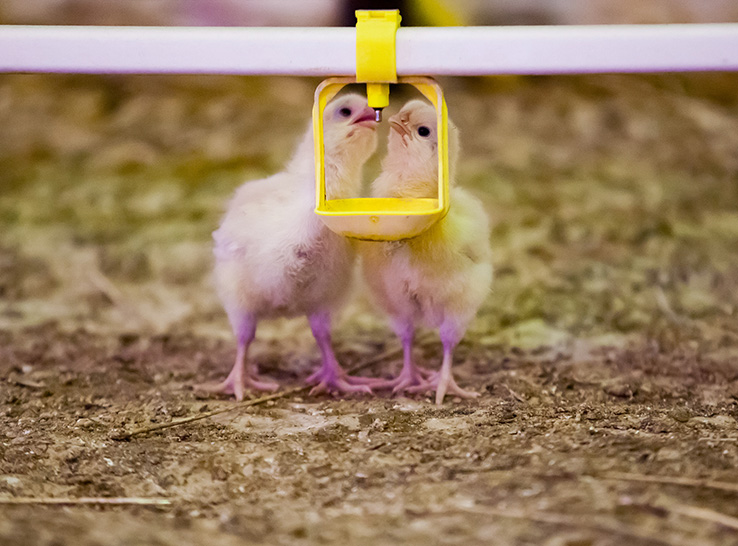
Third, day-to-day management and biosecurity play a critical role in limiting transmission. “The Histomonas parasite can live in water for several hours, so making sure that waterers are clean [is important],” Kimminau said.
She also highlighted the importance of litter management and environmental control, particularly given how the parasite survives.
“If it is in a Heterakis worm or in a Heterakis egg, there is much more capability to live in harsher environments,” she said. This makes thorough cleanout, litter removal and drying essential to prevent ongoing infection cycles.
Kimminau said that no single intervention will solve the problem, and with limited treatment options available, producers must remain proactive.
“It is something that is not going away and is something we have to be diligent about, especially as we have fewer options to kill the parasite.”
Editor’s note: Content on Modern Poultry’s Industry Insights pages is provided and/or commissioned by our sponsors, who assume full responsibility for its accuracy and compliance.