

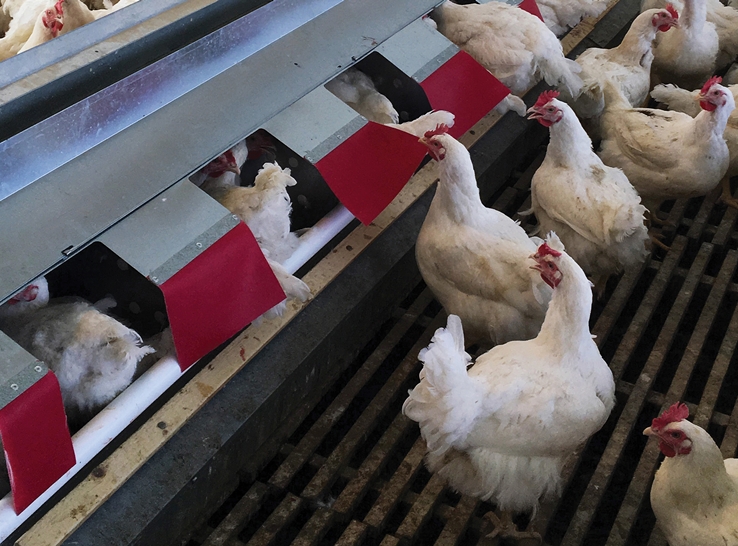


Main photo courtesy of VAL-CO Industries
Maintaining the right temperature in a broiler house involves more than setting a thermostat. How heat is distributed, how well a building retains warmth and how birds respond to their environment can all influence chick comfort, litter conditions and production performance.
During brooding, young chicks depend on a carefully managed thermal environment to maintain body temperature and support early development. Cold spots, excessive floor temperatures and drafts can make it difficult to provide consistent conditions throughout the house, even when the average air temperature appears adequate.
For producers, the challenge is not simply generating enough heat. It’s delivering that heat where it’s needed while avoiding unnecessary energy use.
What bird distribution can tell producers
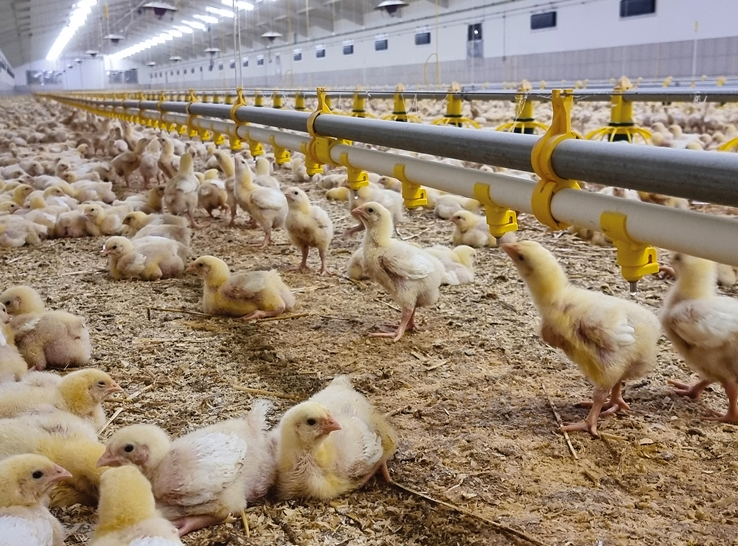
Observing how chicks distribute themselves throughout a broiler house can provide valuable insight into their thermal comfort. Chicks clustering together, avoiding certain areas or spreading unevenly across the brooding space may indicate temperature differences, drafts or other environmental conditions that warrant attention.
Producers should evaluate bird behavior alongside temperature readings at chick level, litter conditions and ventilation patterns. Because temperatures can vary throughout a house, a single thermostat reading may not accurately reflect conditions chicks are experiencing.
Why radiant heating matters
Radiant tube heaters can deliver heat to the floor and surrounding surfaces, helping establish suitable conditions for chicks during brooding. However, a radiant heating system’s effectiveness depends on more than its total heating capacity.
Research published by the University of Georgia in ‘Poultry Housing Tips’ highlights the importance of providing a range of floor temperatures during brooding, allowing chicks to select areas that meet their thermal needs. Depending on their configuration, fewer, higher-output heaters may create hot spots directly beneath the tubes while leaving other areas cooler. Proper heater selection and placement can help reduce excessive temperature differences.
In a 2-year comparison of 8 broiler flocks at the Louisiana State University AgCenter’s Hill Farm Research Station, researchers found that a house equipped with radiant tube heaters used 9.86% less propane than a comparable house equipped with conventional brooders, saving approximately 630 gallons. Livability, average bird weight and feed conversion were similar between the two houses. Although the tube heaters had higher initial installation costs, the findings suggest that radiant tube heating can offer fuel savings under certain operating conditions.
The connection between heating, litter and ventilation
Heat distribution also affects how producers manage the broader brooding environment. Radiant heaters positioned closer to sidewalls can help warm areas where litter moisture may be more problematic and where cold air enters through sidewall inlets.
Heating must work alongside ventilation, insulation and building maintenance. Proper ventilation helps remove excess moisture and maintain air quality, while effective insulation and reduced air leakage help limit heat loss and drafts. Producers should evaluate these factors together to maintain suitable conditions at the bird level.
Designing a more effective heating strategy
When evaluating a radiant tube heating system, producers should consider several factors:
- Heating capacity: Match system output to the house’s heating requirement.
- Heat distribution: Assess temperatures across the floor, including near sidewalls, feeders and drinkers.
- Heater length and placement: Evaluate the layout to identify potential hot and cold spots.
- Insulation and air leakage: Address heat loss and drafts.
- Ventilation: Maintain air quality and manage moisture.
- Bird behavior: Monitor flock distribution, activity and litter conditions alongside temperature readings.
Engineering radiant heat for agricultural environments
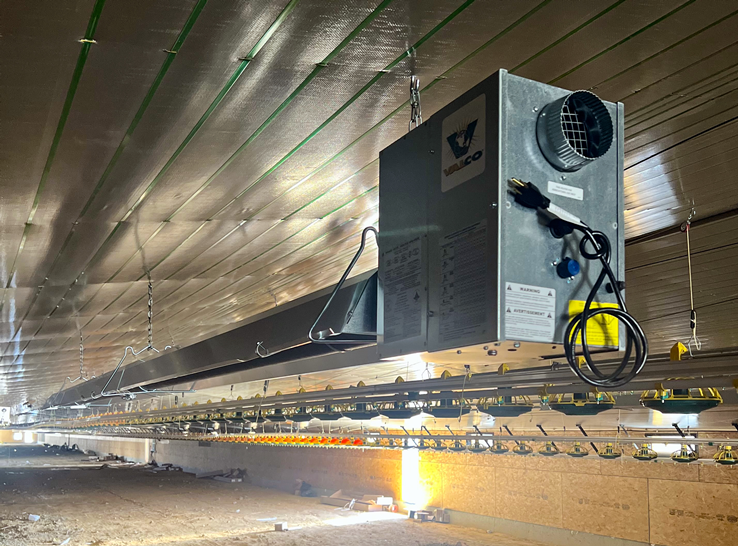
VAL-CO’s SRP AUX model infrared tube heater is designed for demanding agricultural environments. It features a horizontal reflector that is designed to direct radiant heat toward the floor, helping focus warmth where chicks need it most rather than relying primarily on heating the air. Proper heater sizing and placement, along with adequate insulation and ventilation, remain essential to achieving effective results.
Tony Whiddon, SRP agriculture sales specialist, explains the role of the company’s shield design. “Our shield design is a key part of how we deliver radiant heat to the floor. SRP uses 10-bend shields across its agricultural product line to help direct heat toward the floor, rather than allowing it to be reflected back toward the tube. This helps us focus radiant energy where it’s needed most, supporting effective and efficient heating.”
Reflector design is a factor to consider when evaluating how effectively a radiant tube heater directs heat toward the floor and across the brooding area.
Supporting performance from the ground up
Effective brooding depends on more than maintaining the right air temperature. Radiant heat distribution, heater design and placement, ventilation, insulation and litter conditions all contribute to a comfortable environment for chicks. By considering these factors together and observing bird behavior alongside temperature readings, producers can make more informed heating decisions that support chick comfort, flock performance and energy efficiency.
For more information about the SRP AUX infrared tube heater, click here or call 800-998-2526.
References
1. Czarick, M. and Fairchild, B. Next Generation Low-Intensity Radiant Tube Heaters. University of Georgia, Poultry Housing Tips.
2. Owens, W. E., & Ray, C. (2013). Tube heater evaluations at the Hill Farm poultry demonstration houses. Louisiana Agriculture, 56(1), 25–26. LSU AgCenter.
Editor’s note: Content on Modern Poultry’s Industry Insights pages is provided and/or commissioned by our sponsors, who assume full responsibility for its accuracy and compliance.