



By Jenna Boewe, Purdue University and Marisa Erasmus, PhD, Purdue University
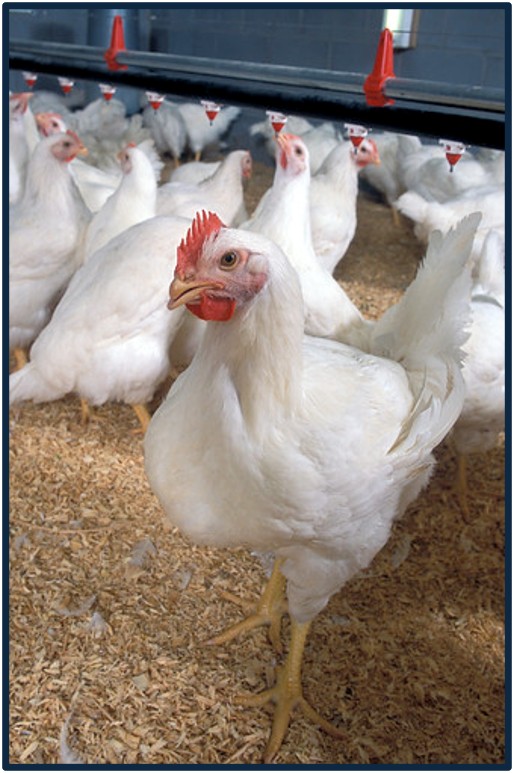
Photo Credit: U.S. Department of Agriculture
Over the past several decades, broiler production has made a lot of progress in growth rate, feed efficiency, and meat yield. Broilers are now being raised to twice the size in about half the time. These genetic selection efforts have also influenced the birds themselves, leading to changes in their behavior and welfare. With traditional broiler welfare assessments, the focus has been primarily on the prevention of negative outcomes like lameness, dermatitis, metabolic disorders, and mortality (see Vol. 19 for more information about on-farm broiler welfare assessment). While these measures are very important, animal welfare science has moved beyond a framework based solely on minimizing harm to one that incorporates opportunities for positive affect, recognizing that good welfare is not simply the absence of suffering, but also involves supporting animals’ capacity to engage in the behaviors that they are motivated to perform and to experience positive states (Mellor, 2016; Yeates and Main, 2008). For more information on animal welfare frameworks and measuring emotions, see Vol. 66.
Indicators of positive welfare
Activity and locomotion
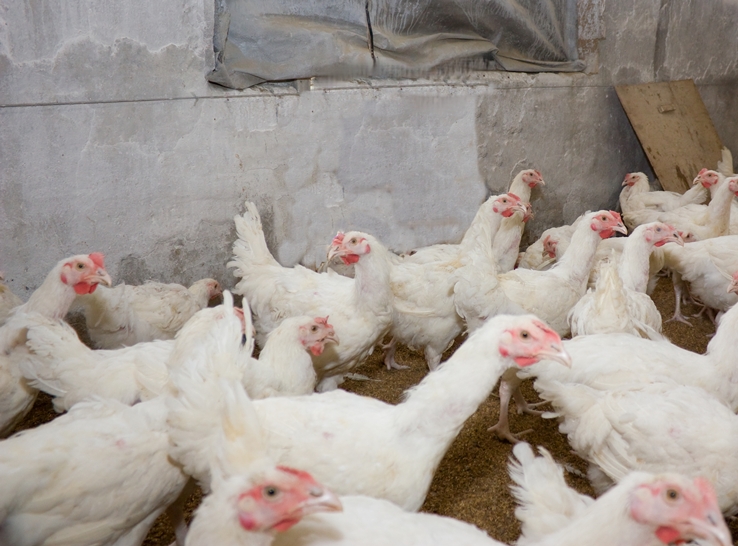
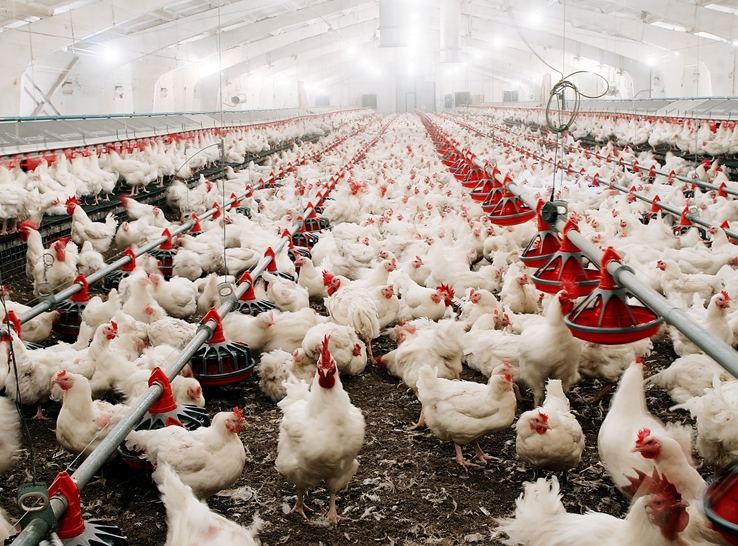
One of the clearest behavioral indicators of broiler welfare is activity and locomotion. Broilers are naturally active, but fast-growing strains tend to spend a large proportion of their time sitting. This typically increases as they reach market weight. Research shows that inactivity increases with body weight and age, and that at similar ages, fast-growing strains are significantly less active than slow-growing strains (Bokkers and Koene, 2003; Baxter et al., 2021). Broilers that are more inactive are at a greater risk for lameness and footpad dermatitis due to increased contact with litter, which can lead to negative affective states.
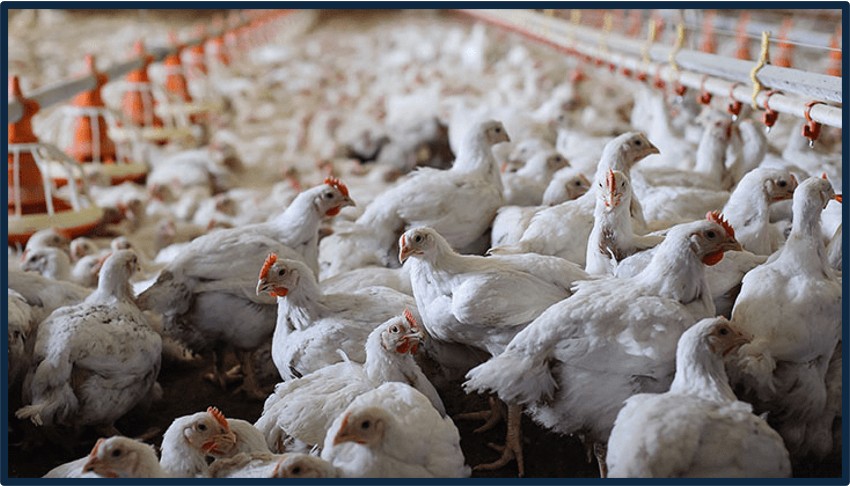
Photo Credit: U.S. Department of Agriculture
Birds should be able to move freely, walk without visible discomfort, and distribute themselves throughout the house. When they do this, it suggests that their musculoskeletal system supports their body weight effectively and they are able to access key resources, such as feed and water. Keeping birds active and dispersed helps maintain litter quality by preventing crowding in one area. Environments that encourage activity are associated with an increase in walking, exploration, and voluntary transitions between sitting and standing (Dawson et al., 2021; Nicol, 2024). The increase in these behaviors may be associated with positive affective states; for example, one study reported that a higher level of environmental complexity can lead to positive affective states (Anderson et al., 2021).
Foraging and environmental interaction
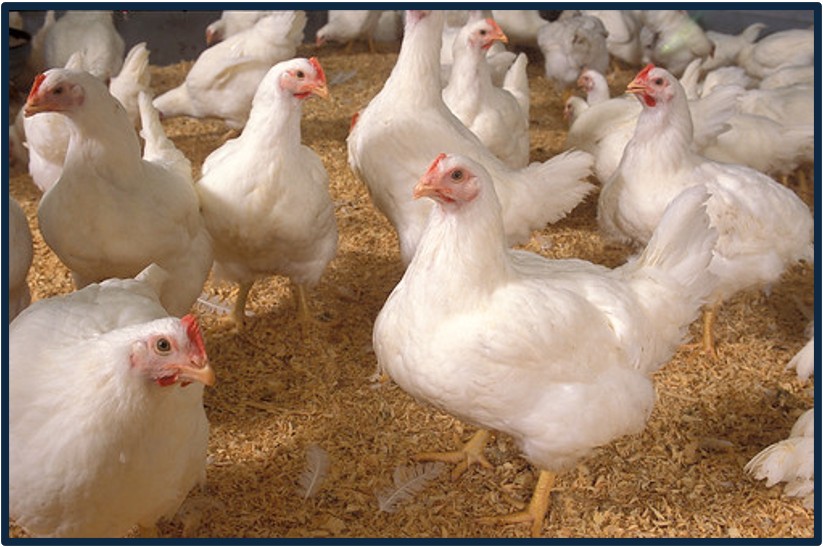
Photo Credit: U.S. Department of Agriculture
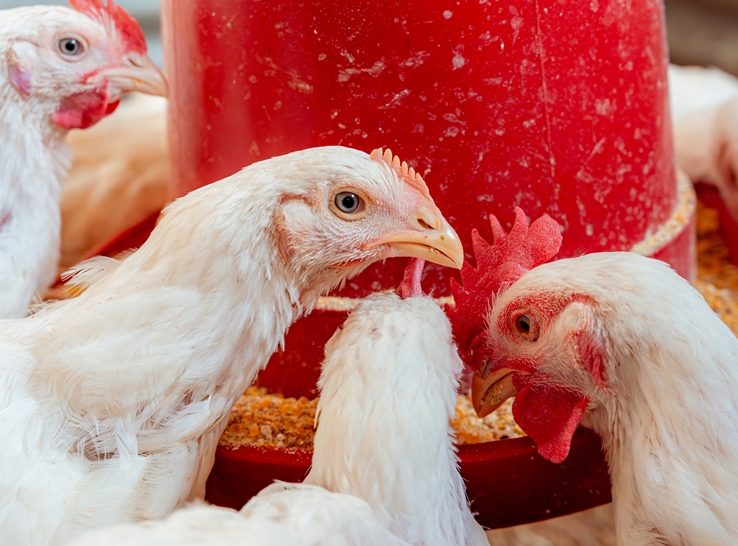
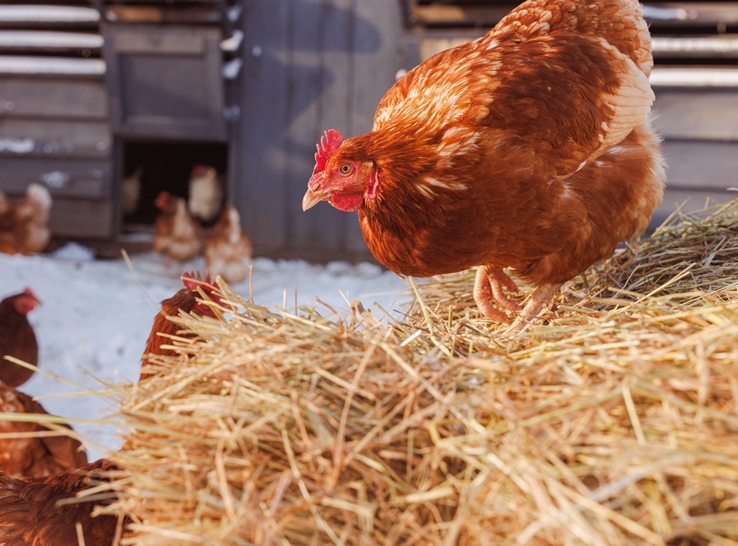
Another behavioral indicator of positive welfare is foraging. In domestic chickens, foraging is a highly motivated behavior, even when birds are given access to nutritionally complete feed. Foraging behavior can be seen when broilers peck, scratch, and investigate their environment. It is naturally rewarding for broilers when they are actively foraging and interacting with environmental enrichments. Including enrichments in the environment can increase species-specific behaviors and improve welfare. Some enrichments that have been investigated for improving environmental interaction and broiler welfare include elevated platforms, panels or barriers, straw bales, sand or roughage, and novel objects (see Vol. 5).
Several factors influence broilers’ foraging behavior and environmental enrichment usage. When comparing different strains, slower-growing broilers engage more frequently in exploratory and foraging behaviors than faster-growing broilers (Baxter et al., 2021); see Vol. 31 for more information about broiler growth rate and behavior. This reduced engagement could reflect physical limitations rather than lack of motivation. The environment that broilers are in also plays a role in their motivation to perform certain behaviors. Poor litter quality, high stocking density (see Vol. 39 for a discussion about stocking density and broiler behavior), and limited enrichment can suppress foraging behaviors and exploration. Foraging behavior can serve as both a practical indicator of biological capacity and management quality when birds are regularly observed interacting with their environment. However, the relationship between foraging behavior and affective state needs further investigation.
Comfort behavior
Preening, wing stretching, body shaking, and dustbathing are all examples of comfort behaviors. These types of behaviors are very important components of positive welfare. These behaviors seem to reflect a state of comfort for the bird because these behaviors promote feather maintenance, parasite control, and thermoregulation. A study from Riber and Wurtz (2024) has shown that broilers are highly motivated to dustbathe and will work to gain access to suitable substrates, such as sand, peat moss, fine straw, and wood shavings. Learn more about dustbathing and its importance in Volume 54 “Behavioral needs of chickens – Dustbathing”.
When broilers are observed to be participating in comfort behaviors like stretching fully, shaking out their feathers, and dustbathing, it suggests that the environment is positive for the birds and therefore increases their welfare.
Play behavior
Play behavior is another good indicator of positive welfare in broilers (reviewed in Jacobs et al., 2023). There has been little research related to play behavior in commercial poultry, but it is typically seen in young broilers. Play behaviors include running, sparring, wing flapping without aggression, play-fighting, and spontaneous jumping and running. When birds are in good health and not under environmental stress, they will exhibit these behaviors.
In recent research, higher levels of spontaneous locomotor activity resembling play were seen in younger, more active, and slower-growing broiler strains (Baxter et al., 2021; Nicol 2024). Due to the energetic costs, birds that are in distress or experiencing poor welfare are less likely to display play behavior. Therefore, play behavior can be used as an indicator that the energy requirements and environmental needs of the birds are being met; however, play behavior depends on the age of the broiler and may not be a good indicator of positive welfare for older broilers. Play behavior is likely to be most frequent in the first two to three weeks of life, specifically after environmental changes, like when fresh bedding or enrichments are added. Play is not currently part of any standard welfare audits, but watching flocks for play behaviors may give producers a snapshot of their birds’ vigor and overall wellbeing within the first few weeks of life.
This table shows how behavioral expressions reflect biological signals within broilers. These signals can then be used to assess broilers’ welfare.
Behavioral indicator |
Biological signal |
Relation to welfare |
Walking & general activity(Baxter et al., 2021; Dawson et al., 2021) |
Adequate skeletal integrity; cardiovascular fitness; absence of pain; structural robustness | Lower lameness risk; improved leg strength; reduced culling |
Low prolonged inactivity(reduced sitting time) |
Good mobility; lower metabolic strain | Inactivity is associated with faster growth rates and leg weakness |
Foraging(ground pecking, scratching) |
Expression of motivated species-typical behavior; environmental engagement; cognitive stimulation | Reflects litter quality and behavioral opportunity |
Use of environmental enrichment(Dawson et al., 2021; Riber et al., 2018) |
Physical capability; exploratory motivation; behavioral diversity | Indicator of environmental suitability and mobility |
Dustbathing(Shields et al., 2004) |
Comfort behavior; expression of species-typical behavior; adequate litter quality; low physical restriction | Sensitive to litter moisture and mobility constraints |
Play behavior(especially < 3 weeks) |
Positive affect; good physical condition; surplus energy; low pain | Indicator of early-life robustness; more common in slower strains |
Even flock distribution(reduced clustering) |
Thermal comfort, adequate space use; low competition; appropriate ventilation | May indicate good environmental management |
Exploration of novel objects(Boissy et al., 2007) |
Low fearfulness; adaptive coping; positive engagement | Linked to stress resilience and environmental stimulation |
Summary
Having good welfare is not only the absence of disease and injury but also the presence of positive states and the ability to express motivated behaviors (Mellor, 2016; Yeates and Main, 2008; Rault et al., 2025). Behavioral indicators such as activity and locomotion, foraging and environmental engagement, comfort behaviors, and play behavior give an indication of broilers’ physical capabilities and overall welfare. Environmental enrichment can further help to support positive welfare by encouraging natural behaviors and engagement within broilers’ housing environment.
References
Anderson, M. G., Campbell, A. M., Crump, A., Arnott, G. & Jacobs, L. (2021). Environmental complexity positively impacts affective states of broiler chickens. Scientific Reports, 11, 16966. https://doi.org/10.1038/s41598-021-95280-4
Baxter, M., Bailie, C. L., & O’Connell, N. E. (2019). Play behaviour, fear responses and activity levels in commercial broiler chickens provided with preferred environmental enrichments. Animal, 13(1), 171–179. https://doi.org/10.1017/S1751731118001118
Baxter, M., Richmond, A., Lavery, U., & O’Connell, N. E. (2021). A comparison of fast growing broiler chickens with a slower-growing breed type reared on Higher Welfare commercial farms. PLOS ONE, 16(11), e0259333. https://doi.org/10.1371/journal.pone.0259333
Bergmann, S., Schwarzer, A., Wilutzky, K., Louton, H., Bachmeier, J., Schmidt, P., Erhard, M., & Rauch, E. (2017). Behavior as welfare indicator for the rearing of broilers in an enriched husbandry environment—A field study. Journal of Veterinary Behavior, 19, 90–101. https://doi.org/10.1016/j.jveb.2017.03.003
Boissy, A., Manteuffel, G., Jensen, M. B., Moe, R. O., Spruijt, B., Keeling, L. J., Winckler, C., Forkman, B., Dimitrov, I., Langbein, J., Bakken, M., Veissier, I., & Aubert, A. (2007). Assessment of positive emotions in animals to improve their welfare. Physiology & Behavior, 92(3), 375–397. https://doi.org/10.1016/j.physbeh.2007.02.003
Bokkers, E. A. M., & Koene, P. (2003). Behaviour of fast- and slow growing broilers to 12 weeks of age and the physical consequences. Applied Animal Behaviour Science, 81(1), 59–72. https://doi.org/10.1016/S0168-1591(02)00251-4
Dawson, L. C., Widowski, T. M., Liu, Z., Edwards, A. M., & Torrey, S. (2021). In pursuit of a better broiler: A comparison of the inactivity, behavior, and enrichment use of fast- and slower growing broiler chickens. Poultry Science, 100(12), 101451. https://doi.org/10.1016/j.psj.2021.101451
Jacobs L., Blatchford, R. A., de Jong, I.C., Erasmus, M. A., Levengood, M., Newberry, R. C., Regmi, P., Riber, A.B. & Weimer, S. L. (2023). Enhancing their quality of life: environmental enrichment for poultry. Poultry Science, 102,102233, https://doi.org/10.1016/j.psj.2022.102233
Mellor, D. (2016). Updating Animal Welfare Thinking: Moving beyond the “Five Freedoms” towards “A Life Worth Living.” Animals, 6(3), 21. https://doi.org/10.3390/ani6030021
Nicol, C. J., Abeyesinghe, S. M., & Chang, Y.-M. (2024). An analysis of the welfare of fast-growing and slower-growing strains of broiler chicken. Frontiers in Animal Science, 5, 1374609. https://doi.org/10.3389/fanim.2024.1374609
Rault, J.-L., Bateson, M., Boissy, A., Forkman, B., Grinde, B., Gygax, L., Harfeld, J. L., Hintze, S., Keeling, L. J., Kostal, L., Lawrence, A. B., Mendl, M. T., Miele, M., Newberry, R. C., Sandøe, P., Špinka, M., Taylor, A. H., Webb, L. E., Whalin, L., & Jensen, M. B. (2025). A consensus on the definition of positive animal welfare. Biology Letters, 21(1), 20240382. https://doi.org/10.1098/rsbl.2024.0382
Rayner, A. C., Newberry, R. C., Vas, J., & Mullan, S. (2020). Slow-growing broilers are healthier and express more behavioural indicators of positive welfare. Scientific Reports, 10(1), 15151. https://doi.org/10.1038/s41598-020-72198-x
Riber, A. B., & Wurtz, K. E. (2024). Impact of Growth Rate on the Welfare of Broilers. Animals, 14(22), 3330. https://doi.org/10.3390/ani14223330
Shields, S. J., Garner, J. P., & Mench, J. A. (2004). Dustbathing by broiler chickens: A comparison of preference for four different substrates. Applied Animal Behaviour Science, 87(1–2), 69–82. https://doi.org/10.1016/j.applanim.2004.01.003
Van Der Eijk, J. A. J., Gunnink, H., Melis, S., Van Riel, J. W., & De Jong, I. C. (2022). Reducing stocking density benefits behaviour of fast- and slower-growing broilers. Applied Animal Behaviour Science, 257, 105754. https://doi.org/10.1016/j.applanim.2022.105754
Yeates, J. W., & Main, D. C. J. (2008). Assessment of positive welfare: A review. The Veterinary Journal, 175(3), 293–300. https://doi.org/10.1016/j.tvjl.2007.05.009
To view all issues of Poultry Press, click here.
Editor’s note: Content on Modern Poultry’s Industry Insights pages is provided and/or commissioned by our sponsors, who assume full responsibility for its accuracy and compliance.