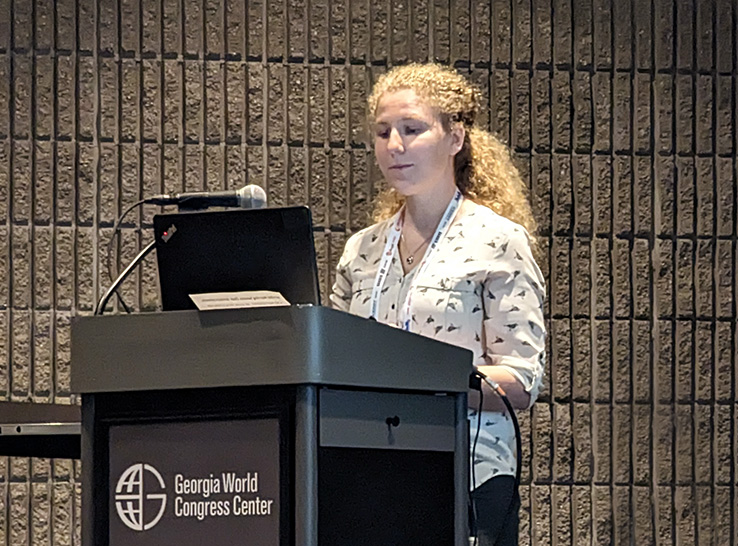




At an April 2026 Poultry Extension Collaborative webinar that examined the connection between chronic stress, welfare and biomarkers, Newcastle University evolutionary neurobiology researcher Tom Smulders, PhD, presented his work determining whether hippocampal neurogenesis can be a marker of affective valence in poultry.
Affective valence refers to an animal’s positive or negative emotional experience.
“Ideally, measuring welfare in poultry would be something that integrates over time and would be sensitive to whether experiences were good or bad,” Smulders said. Corticosterone, he explained, increases when birds experience changes in their environments, but it doesn’t indicate whether those changes are good or bad.
Corticosterone, Smulders noted, is a marker of arousal, not valence.
Neurogenesis, chronic stress
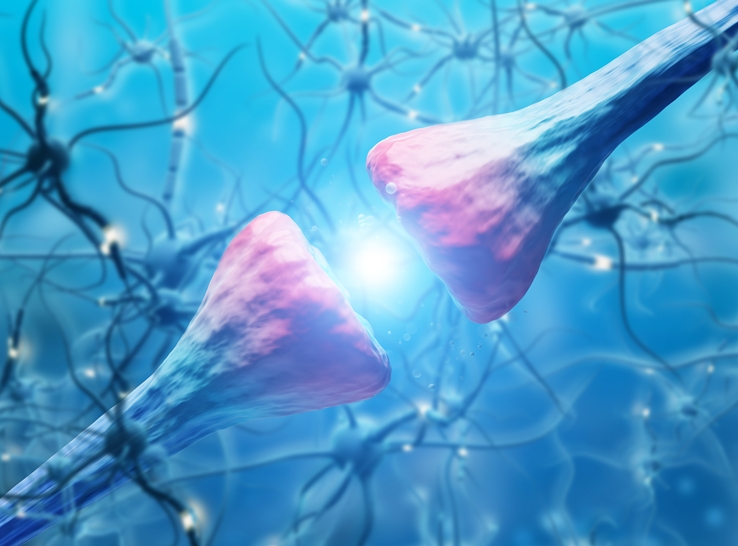
Examining the hippocampus provides evidence of stress. The scientific literature, based on studies in mice and rats, reports that neuronal development, or what Smulders refers to as adult hippocampal neurogenesis (AHN), decreases with chronic stress and increases during recovery from negative experiences and enrichment.
Smulders’s team first investigated whether chronic, unpredictable stressors in chickens impacted AHN in their brains. They exposed laying hens to various unpredictable stressors that changed daily, including:
- Isolating a hen in a box
- Introducing wind using a fan
- Removing food for several hours
- Fluctuating temperature
- Altering the duration of daylight to 21 hours of light or 21 hours of darkness
- Spraying chickens and pens with water and leaving them wet overnight
Results indicated that stressed hens had reduced neurogenesis, particularly in the caudal region of the hippocampus. “This study indicates that we can use AHN levels as markers of chronic stress,” Smulders said.
Recovery from stress
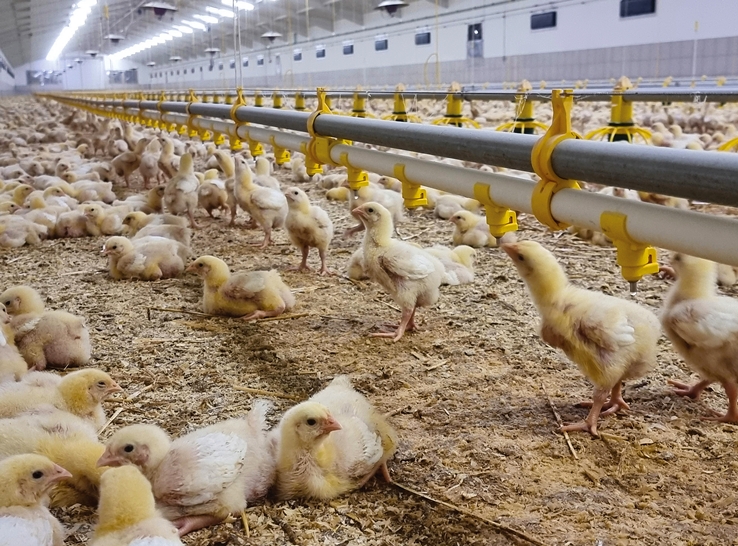
The team then assessed whether birds fully recover from stress and if the timing of stress plays a role. To do so, they examined brains from birds with either severe or minor keel bone fractures.1 He explained that in the UK, battery housing has been replaced by other housing systems, such as multi-tier cage-free housing, which most assume is better for bird welfare. But he said cage-free birds often experience more keel bone fractures.
Birds in the fracture study were X-rayed 11 times between 21 and 60 weeks of age. As expected, Smulders found more AHN in birds with minimal keel damage than in those with more damage. He also found a correlation with the age of the injury: Birds with early breaks had fewer new neurons, suggesting early chronic stress is especially detrimental to welfare.
“Reducing keel fractures is not only important in laying hens because fracture repair takes calcium away from egg laying, but it’s also important because the fracture affects the rest of the animal’s life,” he said.
Housing system effects
Next, Smulders examined the effects of the housing system on AHN levels. He compared hens housed in enriched cages with those in free-range systems. The enriched cages provided separate compartments for laying, scratching and feeding and housed 60 birds. The free-range system housed thousands of birds, allowing outdoor access while maintaining a multi-tiered indoor aviary.
In addition to sampling birds from each housing system, he divided them by physical condition. Birds that appeared in excellent condition, with good weight, bright combs and good feathering, were sampled along with birds that were in poor condition.
“We didn’t find any correlation attributed to housing,” he said. “But we did observe that birds in poor condition had lower neurogenesis.
“Maybe the comparison between housing systems should be based on the number of birds in peak and poor condition,” Smulders noted.
Footpad dermatitis, neurogenesis
Smulders and his team also measured AHN levels in birds with footpad dermatitis. Unsurprisingly, they found lower AHN in significantly affected chickens. But some birds didn’t follow this pattern. With further investigation, he learned that the birds in this study were a mix of traditional commercially raised chicks and those raised with access to a dark brooder.
Mimicking a hen’s wing, Smulders explained, a dark brooder provides a dark, warm place for newly hatched chicks. Interestingly, he found no correlation with footpad dermatitis and AHN levels in the birds that had access to a dark brooder as chicks. He suggested that early-life experiences may set up systems that make birds more resilient to chronic stress. However, he noted, more research is needed.
Key takeaway
Smulders’s research revealed that stress is cumulative and that consistency, enriched environments and early experiences impact the well-being of poultry.
Reference
1. Armstrong EA, Rufener C, Toscano MJ, et al.Keel bone fractures induce a depressive-like state in laying hens. Sci Rep. 2020;10(1):3007. https://doi.org/10.1038/s41598-020-59940-1