

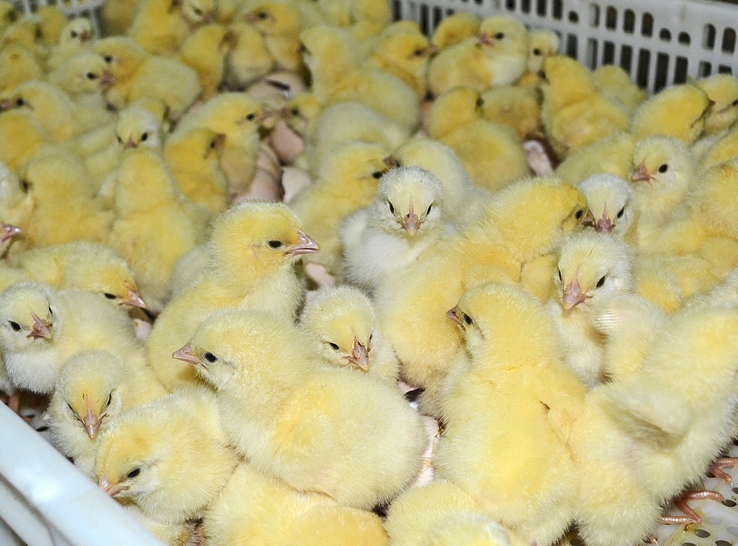


Modern commercial chicks hatch into a very different world than they would under natural conditions. According to Ivan Rychlik, DVM, researcher at the Czech Republic’s Veterinary Research Institute, that difference has major consequences for gut health, disease resistance and antibiotic use.
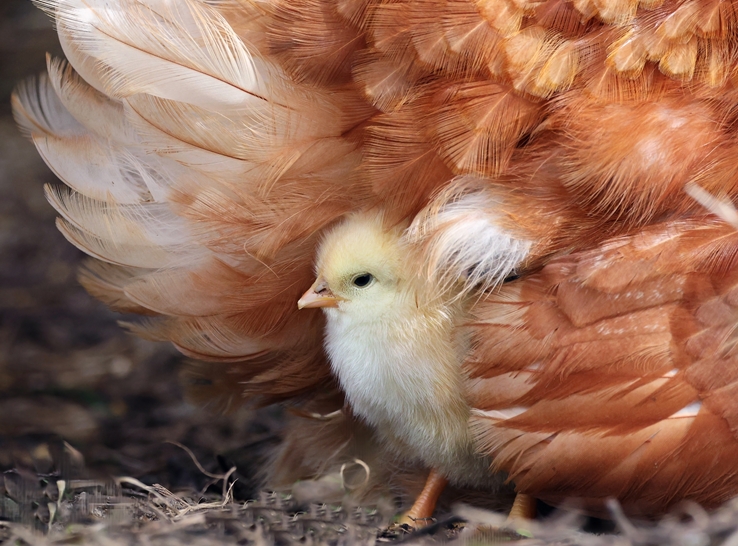
In a webinar supported by the Poultry Science Association and Animal Nutrition Centre of Canada, Rychlik explained, “In nature, chicks are hatched in a nest and remain in contact with their parents from the very first moment of their lives. This difference is important for the development of chicken gut microbiota.”
Rychlik and his team compared chicks raised in commercial hatcheries with chicks placed in physical contact with an adult hen. They analyzed gut bacteria using DNA sequencing.
“The cecal microbiota composition differs in chicks kept alone,” Rychlik said. He found that chicks raised in hatcheries are dominated by intestinal Gram-positive bacteria, specifically Firmicutes, and are sensitive to infections. In contrast, “chicks kept with an adult hen developed gut microbiota that couldn’t be differentiated from the microbiota of the adult hen and were resistant to infections.
“This experiment completely denies the long-held belief of age-dependent development of chicken gut microbiota,” Rychlik said. He found that early microbial development is driven by exposure, not time. “If you add a proper source (parent, adult, birth, contact), chicks can be colonized by adult-type microbiota from the very first days of their lives.”
Disease resistance
“Hatchery chicks are sensitive to different intestinal infections, while chicks exposed to adult microbiota are resistant to infections like a Salmonella challenge,” he said.
After more than a decade of work, Rychlik’s team developed a unique mixture of nine specific anaerobic bacteria that promote disease resistance.
When this bacterial mixture, QunCNA, was administered to newly hatched chicks that were challenged with Salmonella a week later, the research team observed dramatic protection.
“Chicks colonized by this mixture were 100 times more resistant to a Salmonella challenge,” he said. “In addition, we have evidence that if there is increased resistance to a Salmonella challenge, chicks are also more resistant to other enteric diseases as well.”
QunCNA was approved for use in the Czech Republic in 2024, and in 2025, it was used in about 5% of chicks produced nationally, mostly broilers. “Farmers and users were quite satisfied,” Rychlik noted. Adoption has continued to rise with a critical side benefit: reduced antibiotic use.
Early protection for chicks
Rychlik explained that most mortalities occur during the first 3 or 4 days after chicks are placed in houses. Thus, from a producer and industry perspective, 7 days is too long to wait for protection. “Waiting until day 7 for protection wouldn’t cover chicks during their most vulnerable period.”
The team began investigating bacterial exposure early in chicks’ lives, including bacteria present in embryos, eggshell waste and newly hatched chicks themselves. They found that day-old chicks often carried near-monocultures of either Enterococcus faecalis or Escherichia coli.
“Either chicks were completely free of bacteria or, when these bacteria were present, they formed nearly 100% of the bacteria found,” he said.
This opened the door to bacteriophage use. “If there are nearly monocultures of E. faecalis or E. coli, it might be possible to use phages. When you administer the phages, the bacteria target is in there, and there is no interference with other bacteria,” Rychlik explained.
His early trials suggest that phages, when combined with probiotics, work synergistically. “Initial experiments were a moderate success, but when we combined the phages with our probiotic product, we noted an increase in treatment efficacy.”
He then analyzed eggshell waste from newly hatched hatchery chicks. Unsurprisingly, Salmonella was identified, and he observed an interesting trend: Salmonella was always absent whenever Chryseobacterium and Sphingobacterium were present in eggshell waste, but present when the other two were absent.
“We started to be interested in these two bacteria for the potential anti-effects against Salmonella,” he noted. “When Chryseobacterium and Sphingobacterium dominated, farmers reported lower mortalities.”
To protect the chicks in hatchery environments, Rychlik began experimenting with a combination of Chryseobacterium and Sphingobacterium, spraying surfaces, floors and walls of hatcheries.
“Spraying the hatchery environment on day 20 of embryonic development reduced the unwanted microbiota.”
Multi-pronged approach reduces mortality and antibiotic use
Summarizing his work, Rychlik said that using a multi-pronged approach — probiotics at hatch, phages in early drinking water and beneficial bacteria in the hatchery environment — reduces mortality and the need for antibiotics.
“When we combine all these three steps, chickens can be produced without any use of antibiotics, protecting not only the chickens but also human populations.”