




Most poultry companies invest significant resources in infectious bronchitis (IB) vaccination programs. But according to Mark Jackwood, PhD, a consultant to Ceva Animal Health and one of the poultry industry’s leading infectious bronchitis virus (IBV) researchers, one critical question often receives less attention than it should: How do you know the program worked?
Today, veterinarians have access to diagnostic and surveillance tools that can provide objective answers. From monitoring vaccine takes to identifying circulating field strains, those tools allow producers to move beyond assumptions and make better-informed disease-control decisions.
Vaccination doesn’t guarantee immunization
Live attenuated vaccines remain one of the most effective tools for controlling IBV, but their success depends on more than simply administering them to birds.
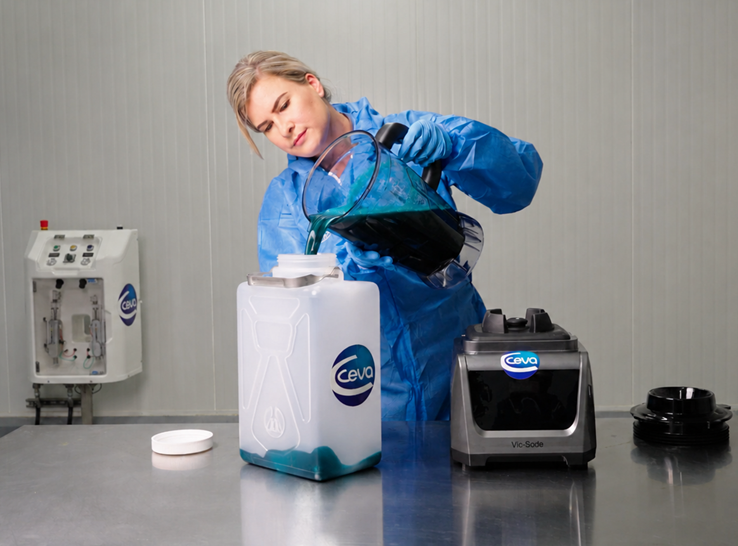
IBV is a fragile virus that can be affected by a range of factors before it ever reaches the flock. Water quality, temperature, storage conditions and application procedures can all influence vaccine viability.
“IBV vaccines have to be handled carefully,” Jackwood said. “The virus can be inactivated by disinfectants, chlorine in municipal water systems, unfavorable pH and excessive temperatures. Following the manufacturer’s recommendations for handling and application is critical.”
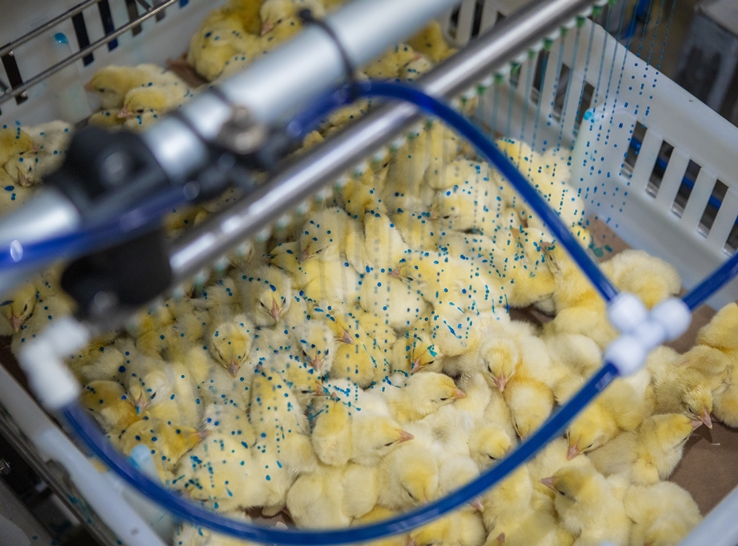
Application equipment can also affect performance. Hatchery spray cabinets and field application equipment must be properly maintained and calibrated to ensure birds receive a full dose of vaccine. Even residual disinfectants left behind after cleaning can reduce vaccine viability.
“The vaccine may be applied exactly as planned, but that doesn’t necessarily mean every bird received a viable dose,” Jackwood said.
For that reason, Jackwood encourages producers and veterinarians to think beyond vaccine administration and focus on whether birds were actually immunized.
“The goal is not simply to vaccinate birds,” he said. “The goal is to ensure the vaccine virus successfully infects the bird and stimulates a protective immune response.”
What vaccine takes can tell you
One of the most useful tools for evaluating vaccination programs is monitoring vaccine takes, Jackwood said.
A vaccine take occurs when the live vaccine virus successfully replicates in the bird following vaccination. Detecting that replication provides evidence that birds received viable vaccine and are likely to develop immunity.
Testing is typically conducted 5 to 7 days after vaccination. Waiting several days helps ensure that detected virus is actively replicating within the bird, rather than simply residual vaccine that remains following application.
Monitoring vaccine takes can reveal problems that might otherwise go unnoticed. A flock may appear healthy, yet testing may show that fewer birds than expected received an effective dose of vaccine.
“If you’re not measuring vaccine takes, you’re relying largely on assumptions,” Jackwood said.
Monitoring becomes particularly valuable when multiple IBV vaccine types are administered simultaneously, a common practice in regions where several field strains are circulating. Modern molecular tests can distinguish among vaccine types, allowing veterinarians to verify that each component of the program successfully reached the birds.
According to Jackwood, a successful vaccination program should typically show vaccine takes in approximately 80 to 90% of the birds tested, though he added that the target should always be 100%.
Better tools, better answers
The diagnostic tools available to poultry veterinarians have changed dramatically over the past 20 years.
Historically, diagnosing IBV often relied on virus isolation and serology. Although those methods still have value in certain situations, molecular diagnostics have greatly improved the industry’s ability to detect and characterize the virus.
Today, veterinarians can identify and differentiate IBV strains much more quickly than was possible in the past, Jackwood said.
Techniques such as reverse transcription-polymerase chain reaction (PCR) and quantitative real-time PCR can detect very small amounts of viral genetic material. These tests can identify the presence of IBV, distinguish among specific virus types and help determine whether birds are carrying vaccine strains, field strains or both.
The increased sensitivity of these tools has provided researchers and veterinarians with a clearer picture of what is happening in commercial flocks. They can detect virus levels that older methods often missed, helping veterinarians better understand infection dynamics and evaluate the effectiveness of vaccination programs, Jackwood said.
Sequencing technologies have further expanded those capabilities. By analyzing portions of the viral genome, specifically the spike gene, laboratories can identify circulating strains and compare them with known viruses.
That information can help determine whether disease challenges are being caused by familiar strains or whether new variants may be emerging.
Why surveillance matters
For Jackwood, however, diagnostics are only part of the equation.
The greatest value comes from using those tools as part of an ongoing surveillance program designed to monitor the viruses circulating within a production system or geographic region.
“Surveillance is perhaps the most critical piece of the IBV control puzzle because it provides the information needed to make good decisions,” Jackwood said. “It tells us which viruses are circulating, whether vaccination programs are working and whether new strains may be emerging.”
Those same principles also shape Ceva’s approach to infectious bronchitis control. Through its IBron® portfolio, the company encourages veterinarians to combine surveillance with science-based vaccination programs, using field data to continually evaluate and refine their IBV control strategies.
“Viruses are constantly changing,” Jackwood said. “If we want to make good vaccination decisions, we need to know what’s circulating in the field.”
Effective surveillance depends not only on the right diagnostic tools but also on collecting the right samples at the right time. Samples collected early in the course of infection generally provide the best opportunity to detect and characterize field viruses before they disappear from the upper respiratory tract, Jackwood noted.
Ultimately, Jackwood views diagnostics and surveillance as essential companions to vaccination rather than separate activities.
“Vaccination remains the foundation of IBV control,” he said. “But verification tells us whether the program is working and whether adjustments need to be made.”
In an era of evolving IBV strains and increasingly sophisticated vaccination programs, producers have more information available than ever before. The challenge is making use of it.
“You can’t manage what you don’t measure,” Jackwood said. “The more we understand what’s happening in the flock and in the field, the better positioned we are to control the disease.”
Want to learn more?
Explore Ceva’s Infectious Bronchitis Knowledge Hub for additional technical resources, practical guidance and expert insights on infectious bronchitis vaccination.
Editor’s note: Content on Modern Poultry’s Industry Insights pages is provided and/or commissioned by our sponsors, who assume full responsibility for its accuracy and compliance.