



Research led by Chloe Phelps, a graduate student in the Virginia Tech School of Animal Sciences, evaluated poultry behavior and its impact on birds’ emotional state and subsequent welfare.
“Motivational behaviors result from survival pressures during evolution but are still relevant today. Performing natural behaviors matters to poultry,” Phelps said during her presentation at the recent Poultry Extension Collaborative virtual symposium on poultry welfare.
She explained that behaviors such as foraging, dust bathing and perching, which ensured that poultry survived to find food, water, shelter and mating partners, are unnecessary in today’s poultry industry environments. And yet, the birds seek opportunities to perform these behaviors.
“Behaviors can be triggered by environmental cues, like bare ground that encourages dust bathing, or physiological cues, such as hunger that stimulates foraging. But when behaviors persist without these cues, and birds are willing to expend energy or experience discomfort to perform them, then the behavior is considered intrinsically motivated,” Phelps noted.
In her research, Phelps demonstrated that foraging, dust bathing and perching are intrinsically motivated behaviors, and the opportunity to exhibit these behaviors is tied to the birds’ mental state and welfare.
Foraging
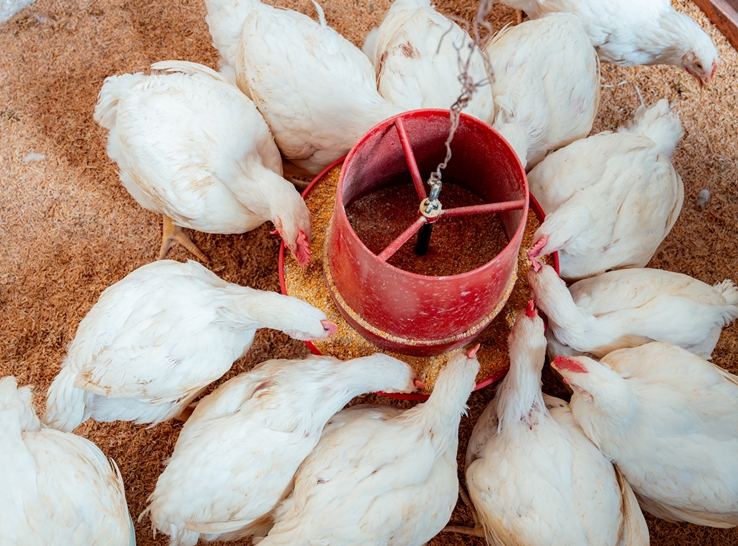
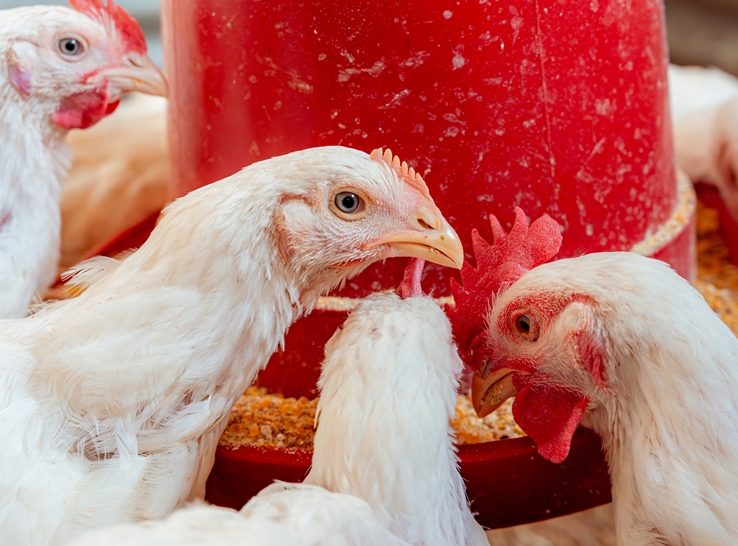
Even with food provided, poultry exhibit foraging behavior. Interestingly, turkeys spend 7% of their time showing foraging behavior, while broilers spend 15% to 20% of their time foraging. Laying hens, if able, spend up to 40% of their time exhibiting foraging behavior.
Phelps noted that birds that cannot engage in foraging behavior often exhibit inappropriate behaviors, such as feather pecking. However, with increased opportunity to forage, feather pecking decreases. She also reported that laying hens were willing to work, squeezing through a small space, to express foraging behavior. Additionally, the poultry that were able to forage showed more comfort behaviors, were more active and exhibited less fear.
Dust bathing
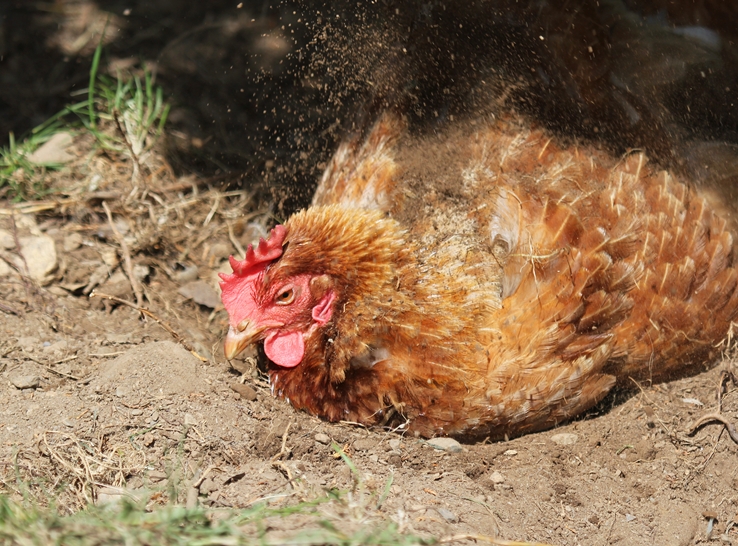
Dust bathing evolved as a means for birds to distribute oils and rid themselves of parasites, but modern poultry exhibit this behavior even when no soil or substrate is available. Phelps reported that chickens exhibited elevated stress hormone levels, vocalized with frustration calls and expressed greater fear when they couldn’t dust-bathe. But birds showed less fear when able to dust-bathe, and they were willing to work, pushing a door or going through a maze, to access substrate.
Perching
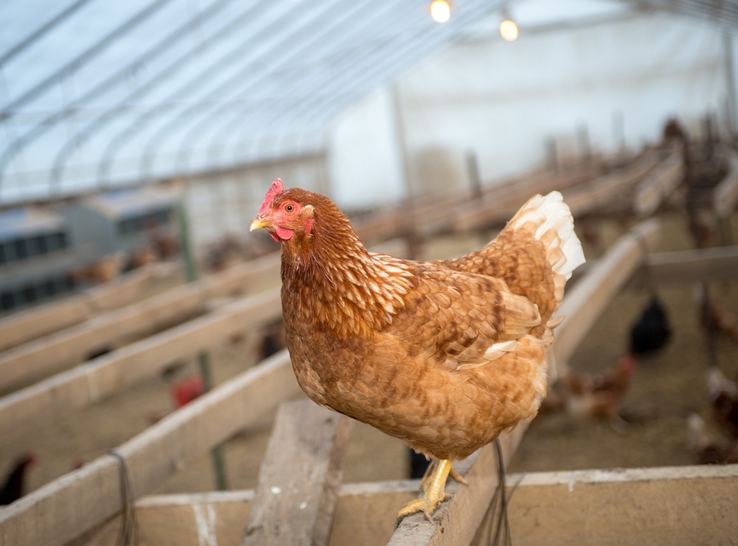
Phelps explained that resting off the ground is a survival technique, but laying hens and broilers in houses seek elevated platforms and perches even when there are no predators, especially during dark periods. “Hens with access to perches showed less aggression, decreased anxiety and reduced fear. There is a decrease in negative emotional states with the opportunity to perch, but when deprived of this behavior, frustration calls increase.”
Taken together, “The ability to express motivated behaviors has a strong impact on effective states and welfare,” Phelps concluded. “Animals experience emotion relative to behavior, and the ability or inability to express behaviors affects their quality of life.”