





Fernanda Castro, Micronutrition and health technical lead, Cargill
Luisa Gene, Microbiome technical lead, Cargill
Manuel Da Costa, DVM, PhD, Director of strategy and innovation, Cargill
The composition and functionality of the gut microbiota are increasingly recognized as critical determinants of poultry performance. A balanced intestinal microbiome influences growth, feed efficiency and overall health through multiple mechanisms. Commensal or indigenous microbiota provide colonization resistance, minimizing pathogenic organisms by competitive exclusion and production of antimicrobial metabolites.
Beyond pathogen control, microbiota play a pivotal role in nutrient metabolism, including the breakdown of complex carbohydrates, the synthesis of vitamins and the facilitation of mineral absorption. It also modulates host endocrine and immune systems through microbial metabolites, such as short- and medium-chain fatty acids (SMCFAs), which influence hormone secretion, energy balance and gut barrier integrity.
Therefore, from a practical standpoint, these interactions directly affect how efficiently birds utilize nutrients from feed and their ability to withstand disease challenges and environmental stressors.
Recent literature demonstrates that the gut microbiome is not static; it can be positively manipulated through targeted interventions. Nutritional strategies have demonstrated efficacy in promoting beneficial microbial populations and improving immune competence. More importantly, studies indicate that accelerating microbiome maturation during the first days post-hatch confers long-term resilience and reduces reliance on antibiotic growth promoters.
Translating microbiome insights into tangible actions with Galleon
With that in mind, the Galleon™ microbiome intelligence platform was developed to help identify the most important gut biomarkers linked to performance and health. Through a combination of the extensive microbiome database, artificial intelligence and Cargill’s nutrition and health expertise, it is possible to translate the status of the flock’s gut into insights on nutrition, health and management that can support users in making informed, science-based decisions.
As an example, the Galleon microbiome database was used to give us insights into how different crude protein (CP) levels influence the gut microbiome and bird performance. The results from five Ross 308 research trials, totaling 2,736 samples, were used. The microbiome samples were obtained from cloacal swabs at 7, 14, 21, 28 and 35 days of age, and birds were grouped into two categories: lower CP and higher CP, based on age-specific cutoff values of 21.5%, 22.8%, 20.6%, 20.6% and 20.6%. All sampled birds were individually weighed, allowing microbiome results to be linked to performance.
This database exploration showed us that, at 14 days, birds on higher-CP diets were 49 grams heavier than those on lower-CP diets, but by 35 days, the trend reversed — lower-CP birds were 130 grams heavier than higher-CP birds (Figure 1). And the answer for that performance pattern can be found in the gut.
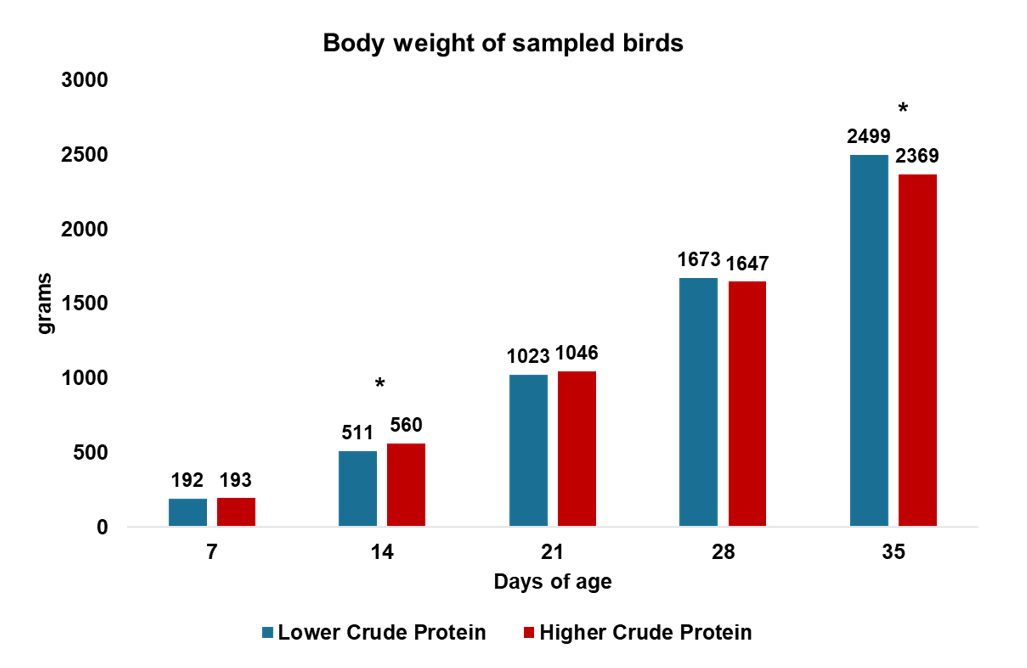
Figure 1. Individual bodyweights of 2,736 Ross 308 birds from five research trials. The birds were grouped into two categories according to the crude protein (CP) level of their diets: lower CP and higher CP, based on age-specific cutoff values of 21.5%, 22.8%, 20.6%, 20.6% and 20.6%.
*Statistically significant at P < 0.05.
The microbiome analysis revealed that the lower-CP diets promoted a shift of microbiome from predominantly proteolytic bacteria at 7 days to short-chain fatty acid (SCFA)-producing bacteria from 14 days onwards; SCFA-producing bacteria are associated with improved gut microbiome maturation. On the other hand, the higher-CP group maintained a higher relative prevalence of lactate-producing bacteria even at later ages (21 and 35 days), a pattern linked to delayed microbiome maturation (Figure 2).
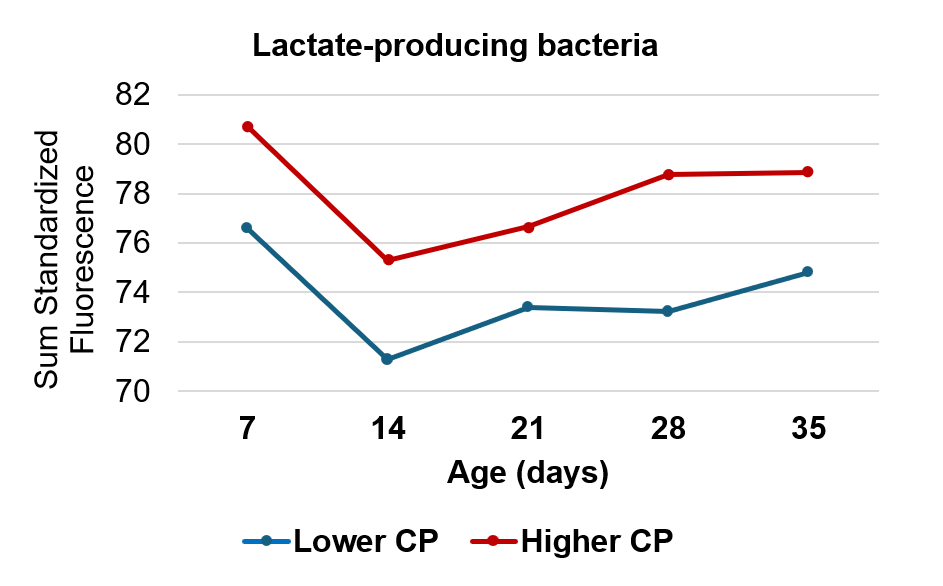
Figure 2. Sum of standardized fluorescence from probes with statistical difference (P = 0.05) in pairwise comparisons between standardized LS-means made for each lactate-producing bacteria and variable combination, adjusting for false discovery rate test.
Additionally, Campylobacter jejuni, one of the biomarkers assessed by Galleon and a proteolytic bacterium associated with foodborne issues, was the highest in the higher-CP birds at 14 and 35 days, aligned with the lower bodyweight observed in this group at the latter date (Figure 3). Because Campylobacter utilizes amino acids as carbon sources, the increase in its levels may indicate undigested protein reaching the hind gut.
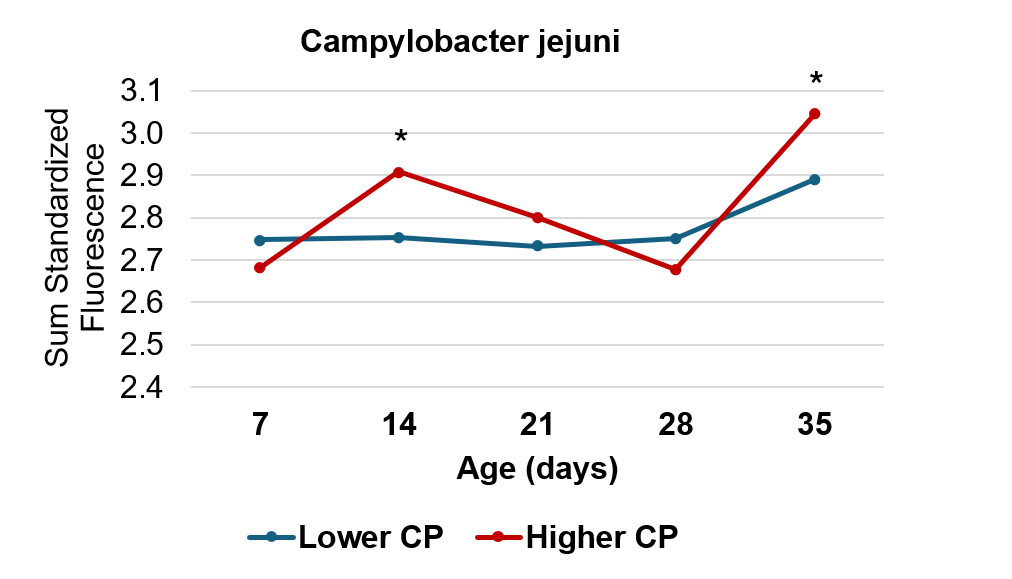
Figure 3. Sum of standardized fluorescence from probes with statistical difference (P = 0.05) in pairwise comparisons between standardized LS-means made for Campylobacter jejuni and variable combination, adjusting for false discovery rate test. <
*Statistically significant at P < 0.05.
Based on these findings and Galleon’s database of microbiome profiles for “high-performing” versus “low-performing” flocks, we can recommend nutritional strategies to steer the microbiome toward a more favorable composition. In the higher-CP birds, the expected shift from lactate-producing to SCFA-producing populations did not occur, allowing opportunistic proteolytic bacteria to proliferate.
Initial considerations for this example could include implementing precision nutrition approaches such as analyzing fermentable protein levels in the diet, reducing CP with synthetic amino acid supplementation and using alternative protein sources with higher digestibility to reduce the amount of undigestible protein in the hind gut.
If adjusting CP or ingredients is not feasible (e.g., in organic production), other strategies could include increasing fiber during the starter phase to promote SCFA-producing bacteria, using SMCFA to limit C. jejuni growth or supplementing with additives, such as postbiotics and essential oils, to accelerate microbiome maturation.
Key insights
The insights from Galleon highlight that the diet composition can either accelerate or hinder microbiome maturation, with cascading effects on growth and pathogen susceptibility. This reinforces the need to move toward precision nutrition strategies that actively shape microbial ecology.
By leveraging tools like Galleon, producers can transform microbiome data into actionable interventions, bridging the gap between science and practice. Ultimately, the future of poultry production lies in integrating microbiome intelligence into feeding, health and management programs, enabling performance gains while reducing dependency on antibiotics and mitigating food safety risks.
Editor’s note: Content on Modern Poultry’s Industry Insights pages is provided and/or commissioned by our sponsors, who assume full responsibility for its accuracy and compliance.