




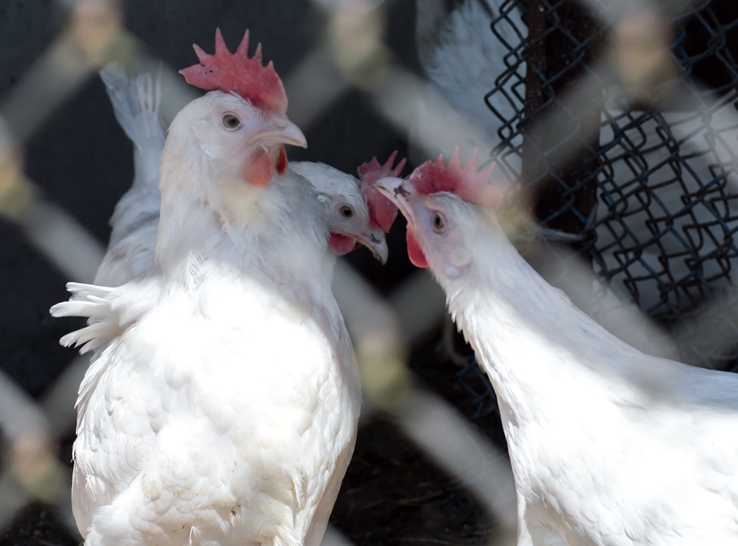
A broiler breeder’s “ovary function is highly sensitive to environmental factors,” which can affect egg production and lead to “significant economic losses,” explained Patricia Quino, a graduate student and part of a research team at Auburn University that evaluated the effect of group size on reproductive performance. She discussed their findings at the 2026 International Poultry Scientific Forum.
Quino found that the larger the group size, the more negative the effects on reproductive performance, as measured by eggshell index, eggshell pigments, eggshell strength and egg weight.
Study parameters
The research team sought to evaluate how group size affected estradiol dynamics, follicular development and egg production.
They used 480 Ross broiler breeders, with 396 females and 64 males, raised under standard management. A 3:4 feeding program was implemented from 6 to 19 weeks of age.
At 20 weeks of age, the birds were allocated into a large (15 feet x 6 feet) or small (4 feet x 6 feet) pen. The small pens held nine females and one male and the large pens held 36 females and four males, thus the stocking density was consistent across pens.
At 32 weeks of age, photostimulation was applied to all birds and one male was removed from the large pen to maintain industry ratios.
Parameters measured
The researchers checked body weight weekly until 30 weeks and then every 5 weeks up to 60 weeks.
Blood samples were collected and centrifuged, and the extracted plasma was stored at 158oF (70oC). Total circulating estradiol levels were measured using commercial ELISA kits.
From 23 to 64 weeks of age, eggs were collected three times daily – morning, noon and afternoon. Egg quality was assessed every 5 weeks from 30 to 60 weeks of age, measuring eggshell pigment, eggshell breaking strength, egg weight and egg shape index.
The birds were euthanized via cervical dislocation at 64 weeks of age to collect their livers, fat pads, ovaries and hair follicles.
Variable results
There were no significant differences between the broiler breeders in the large and small pens for the following parameters:
- bodyweight
- age at first egg
- at 50% production and at peak production
- weights of the livers, fat pads and ovaries.
There were significant differences in egg output though, with hens in the small groups achieving higher peak production than those in the large groups (97.1% versus 86.8%), as well as cumulative egg counts (200.7 eggs versus 175.2 eggs).
When estradiol peaked at 24 to 26 weeks of age, the absolute peak in the small groups was 885 pg/mL, compared with 731.1 pg/mL in the large groups.
Egg sizes in the small groups also averaged 60 grams higher than in the large groups.
Additionally, the small groups had larger hair follicles compared to the large groups. Hair follicles have been shown to enhance reproductive performance, with Quino stating that “significant economic losers tend to have fewer large hair follicles.”
The small groups showed greater strength resistance to eggshell breakage, thereby producing more settable eggs.
Conclusions
In summary, the broiler breeders housed in the larger pens produced 25 fewer usable eggs than those in the smaller pens, indicating that economic losses may result from neglecting the effect of group size on reproduction.
Quino concluded, “Overall, this study demonstrates that the reproductive capacity of female broiler breeders may have greater susceptibility to negative consequences due to larger group sizes, resulting from increasing opportunity for social interaction.”
The study results suggested, for example, that larger groups may create more social stress, which in turn can reduce estradiol secretion and egg production efficiency, and impair hair follicle growth.
Quino is interested in continuing to study the effects of group size on reproductive performance in both commercial and research settings.