



Consistent hatchery vaccination depends on getting a range of factors right — from vaccine preparation and application technique to equipment maintenance, staff training and ongoing monitoring.
Drawing on more than 70,000 hatchery vaccination audits conducted through Ceva Animal Health’s C.H.I.C.K (Chick Hatchery Immunization Control Keys) Program, Alba Pfaff, MS, senior technical marketing manager at Ceva Animal Health, discusses what helps hatcheries maintain high vaccination standards, the details that matter most and how better use of data could support even greater consistency.
Q: Ceva’s C.H.I.C.K Program has provided hatcheries with vaccination quality monitoring, technical support and training for 17 years, encompassing more than 70,000 audits across nearly 100 countries. What has that experience taught you about the factors that determine vaccination quality in practice?
A: One of the clearest lessons we have learned is that teaching is about repetition. Vaccination quality is not achieved through a single training session or a one-time equipment setup. It requires continuous reinforcement.
The more frequently we provide training, observe vaccination practices and give feedback to hatchery teams, the better and more consistent vaccination quality becomes. Even when people know the correct procedure, small deviations can gradually become part of the daily routine. Regular audits and training help bring the process back to the standard and reinforce why each step matters.
We have also learned that vaccination quality is rarely determined by one factor alone. It is the combination of people, equipment, vaccine preparation, application technique, chick handling and continuous monitoring.
The best equipment cannot compensate for poor technique, and even a highly trained team cannot consistently deliver good vaccination if equipment is not correctly maintained or calibrated.
Q: The program focuses on five critical control points — vaccine preparation, dose accuracy, vaccination quality, equipment maintenance and staff training. Where can problems be most easily missed?
A: Problems often arise from small details that can easily be overlooked. Vaccine preparation is one example.
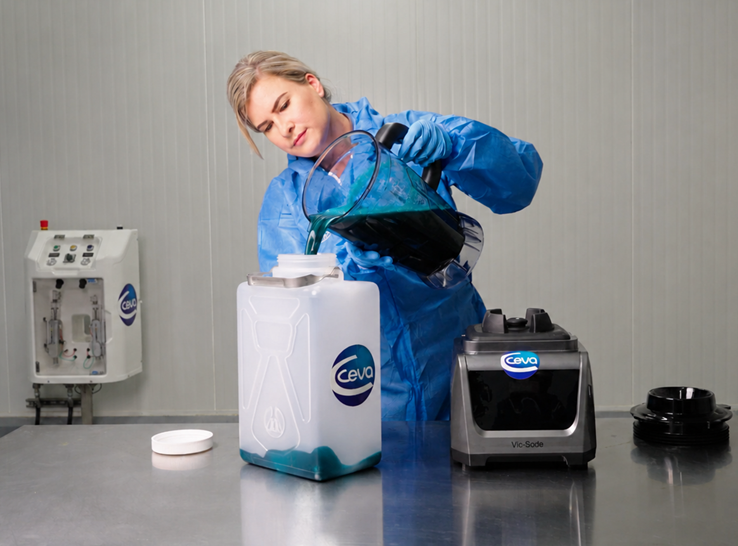
We focus on having a clean, dedicated vaccine preparation room for day-old chick vaccines, correct use of personal protective equipment and adherence to proper preparation and hygiene procedures. Good organization of the preparation area, correct vaccine handling and maintaining a clean environment throughout the process are all important steps in protecting vaccine quality and ensuring consistency.
Q: Data collected between 2021 and 2025 show vaccination quality consistently above 95% for spray vaccination and above 97% for gel application. What does it take to maintain that level of consistency across different hatcheries and production environments?
A: The high consistency comes from standardized procedures, trained hatchery vaccination crews, well-maintained and correctly calibrated equipment and regular quality-control checks.
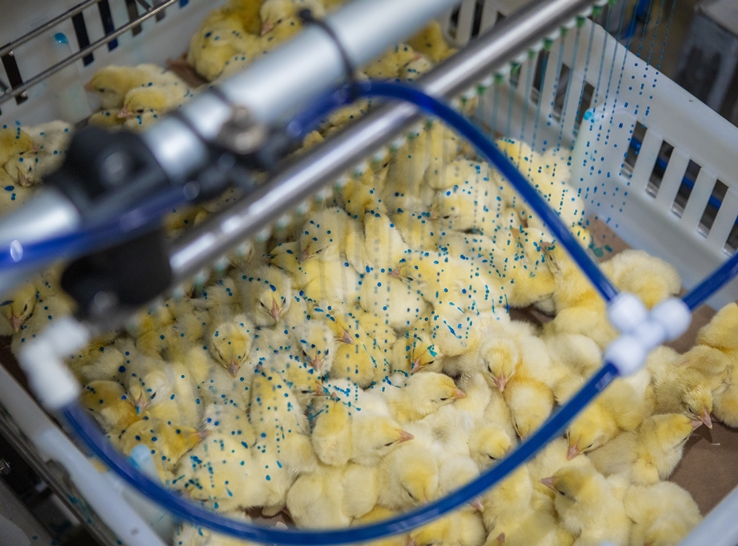
Spray and gel application also present different challenges. With spray vaccination, droplet size, spray pattern and coverage are important. With gel, we focus on gel consistency, droplet distribution and uniform coverage across the chicks.
Understanding those differences allows hatchery teams to focus their quality-control checks on the factors that matter most for each application method.
Q: What role can data play in helping hatchery teams identify problems before they have a significant impact on vaccination quality?
A: Greater use of data allows hatcheries to identify trends, benchmark performance and address potential issues earlier.
Instead of looking at a single audit in isolation, the C.H.I.C.K Program application allows us to track vaccination quality over time. For example, if the data show a gradual decline in spray coverage, the team can investigate the equipment, settings or application process and make a practical adjustment on the hatchery floor.
Q: How much of maintaining consistent vaccination comes down to the people performing the work, and how much to the equipment?
A: Both people and equipment play an important role in vaccination consistency. Well-trained operators understand what good vaccination should look like, while preventive maintenance ensures the equipment can consistently deliver it.
Hatcheries that sustain high performance are those that invest in both: regular staff training, clear procedures, routine equipment checks and preventive maintenance, rather than waiting for a problem to occur.
Q: The C.H.I.C.K Program has now maintained independent Quality Recognition from Bureau Veritas for 10 years. What role can external quality standards play in maintaining consistency over time?
A: Independent recognition from Bureau Veritas has reinforced our commitment to consistent, standardized practices across countries and to continuous improvement of the program.
The recognition involves independent review of how the C.H.I.C.K Program’s Quality Code of Practice is implemented, including whether processes and procedures are properly defined, documented and controlled. That external scrutiny also gives customers confidence that the same high standards are being applied consistently across hatcheries and countries.
Q: If vaccination quality is already consistently high, where is the greatest opportunity to improve further?
A: The greatest opportunity is in using technology and data to move from monitoring quality to predicting and preventing variability.
Greater connectivity between vaccination equipment, real-time data and benchmarking will allow hatcheries to identify opportunities for improvement even earlier. At the same time, continued innovation in equipment, training and strong partnerships will help ensure that high vaccination standards are maintained as hatcheries become increasingly automated.
Editor’s note: Content on Modern Poultry’s Industry Insights pages is provided and/or commissioned by our sponsors, who assume full responsibility for its accuracy and compliance.