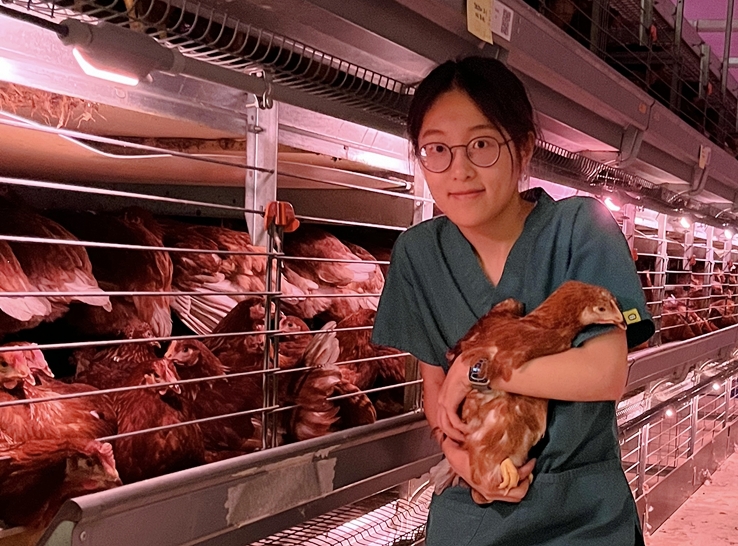

Targeting secondary bacterial infections in aMPV flocks helped to cut losses by $2,142 per house before initiating vaccination
Abstract: Interventions in broiler breeders used to reduce mortality associated with avian metapneumovirus subtype A
A “Rising Stars” article
by Emmanuel Alagbe, MS
PhD Candidate
Graduate Research and Teaching Assistant
Purdue University, West Lafayette, Indiana
A “Viewpoints” article
by Michael Czarick
Extension Engineer – Poultry
University of Georgia
Department of Poultry Science
Currently, 38.7% of laying hen housing systems in the United States are cage-free and this transition continues to increase. However, little attention has been given to pullet housing systems. In this article, Richard Blatchford, PhD, University of California, Davis, provides important considerations for pullet management.
Susan Watkins, PhD, has spent much of her 30-year poultry career studying water problems and how to solve them. A consultant and distinguished professor emeritus at the University of Arkansas, Watkins discussed ways to sanitize poultry water systems and correct mineral damage during the Devenish Symposium at the 2025 PEAK conference.
Avian metapneumovirus has not been detected in the US since the 1990s. So, it was a surprise in 2023 when cases began surfacing in Virginia, West Virginia and North Carolina. By January 31, 2024, the Georgia Poultry Laboratory Network received its first suspect case. Here’s what they did.
By W.A. Dozier, III, PhD
Department of Poultry Science
Auburn University and Alabama Cooperative Extension System
A “Rising Stars” article
by Allison Kawaoku, MS student
Graduate Research Assistant, University of Georgia
Athens, Georgia
There is a buzz about emerging technologies to monitor layers and nudge their behaviors. But, according to Janice Siegford, PhD, from Michigan State University, more “ground truthing” by testing new tech in real commercial conditions is needed to establish whether they will deliver promised advantages for producers.
Merck Animal Health announced the US Food and Drug Administration (FDA) approval of EXZOLT™ (fluralaner oral solution), a parasiticide for chickens that treats and controls northern fowl mites (Ornithinyssus sylviarum) in production houses.
An experimental gut treatment led by molecular microbiologist Melha Mellata, PhD, Iowa State University, demonstrated that using host-specific bacteria improved overall immunity and resistance to bacteria in young chicks.
Data is playing a growing role in helping producers manage risk, optimize health and justify production decisions. From digitizing information to store it securely to using it to guide real-time decision-making, for Dan Wilson, DVM, founder of Wilson Veterinary Co., it has become integral to the way he works with producers to improve flock performance.