

The ionophores: anticoccidials that are the backbone of the poultry industry
By Greg F. Mathis, PhD and Brett Lumpkins, PhD Southern Poultry Feed & Research, Inc, Athens, Georgia
A multi-species microbial feed product outperformed single-species products during a disease challenge, according to research presented at the 2024 International Poultry Scientific Forum by Kevin Bolek, PhD, microbials innovation director for Phibro Animal Health.
Abstract: Comparative effects of ionophore anticoccidials with or without the addition of a QY phytogenic on performance and coccidia lesion scores in broilers challenged with contemporary coccidia strains.
Using a dietary supplement containing a blend of Bacillus bacterial strains appears to positively affect the intestinal health and immunity of broiler chicks after a coccidia challenge, according to a Frontiers in Microbiology report.
Having been linked to everything from yield gains, feed-conversion ratio and immunity to disease tolerance, mortality and animal welfare, intestinal health is foundational to the success of poultry operations today. Three poultry-health experts took part in an intestinal health webinar in which they discussed viral, bacterial and coccidial challenges in poultry, their impact on gut health and potential management strategies.
Posting sessions are critical to ensure that poultry health programs are on target and yielding good returns. They have their limitations, however, and can easily fall short if not set up and implemented correctly.
Phibro Animal Health Corporation has acquired the medicated feed additive product portfolio and certain water-soluble products from Zoetis Inc.
Broilers fed a microbial supplement of four probiotic strains had a lower incidence of Salmonella and higher expression of proteins associated with immunity, according to research presented at the 2024 IPSF by Kevin Bolek, PhD, microbials innovation director for Phibro Animal Health.
Want to learn more about identifying and managing enteric health problems in poultry? A webinar hosted by Vasil Stanev, DVM, director of global technical services for Phibro Animal Health Corporation, is a good place to start.
Research conducted in the US and Germany showed that feeding broilers Quillaja saponaria trees and Yucca schidigera plants improved performance, nutrient digestibility and the physical condition of their intestinal tract, both when the birds were healthy and when they faced a parasitic disease challenge.
Veterinary data play a critical role in not only analyzing poultry health but also implementing long- and short-term strategies to improve health and prevent disease. However, several challenges present roadblocks to capturing and interpreting these data.
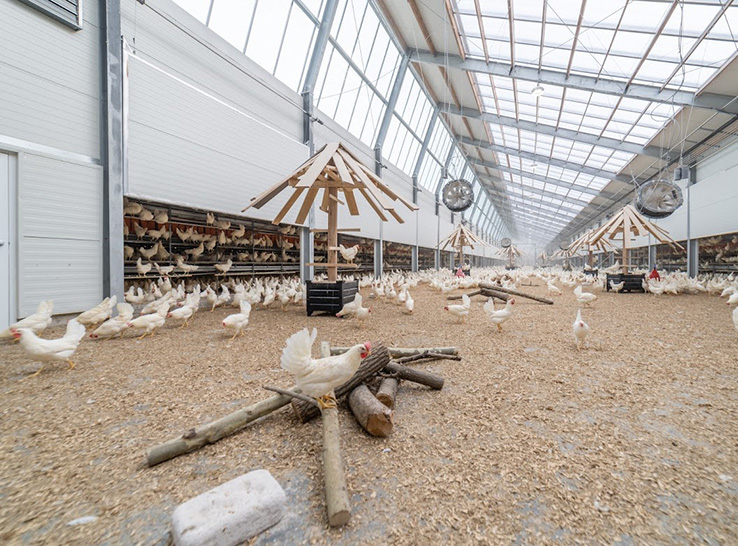
There’s a new egg on the block in the US — the carbon-neutral egg from Kipster Farm. It’s the result of a different approach to egg farming that started in 2017, when Kipster, a Dutch egg producer, introduced the world’s first carbon-neutral egg to the Netherlands.
Heat stress isn't just for summer anymore. A 68-minute webinar with Vasil Stanev, DVM, discusses thermoregulation, heat-stress mechanisms and how to manage heat stress effectively in poultry flocks.
Phibro Animal Health Corporation presented 24 posters at the 2023 World Veterinary Poultry Association congress in Verona, including eight on infectious bursal disease (Gumboro).
Modern Poultry is pleased to host
this editorial page on behalf of