
Targeting secondary bacterial infections in aMPV flocks helped to cut losses by $2,142 per house before initiating vaccination
Abstract: Interventions in broiler breeders used to reduce mortality associated with avian metapneumovirus subtype A
Merck Animal Health announced the US Food and Drug Administration (FDA) approval of EXZOLT™ (fluralaner oral solution), a parasiticide for chickens that treats and controls northern fowl mites (Ornithinyssus sylviarum) in production houses.
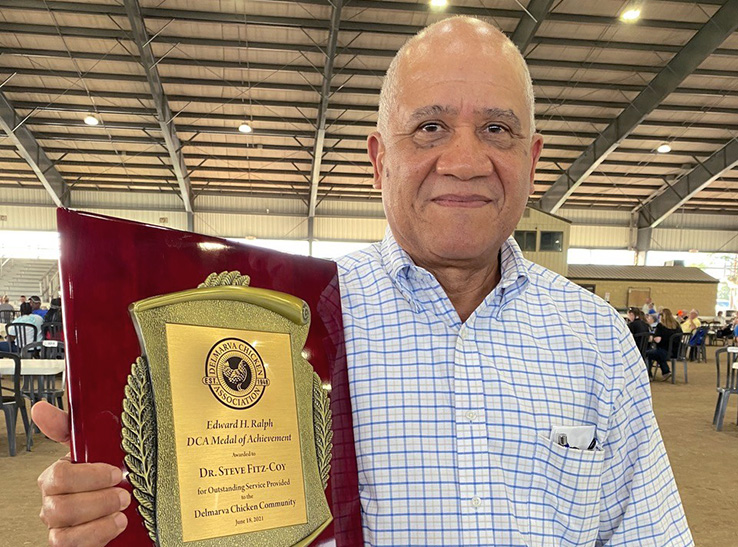
Coccidiosis guru Steve Fitz-Coy, PhD, started his career in the early 1980s. Some 40 years later, coccidiosis continues to be one of the most common and costly diseases of poultry worldwide. And Fitz-Coy, a poultry scientist at Merck for the past 24 years, is still the go-to guy when an outbreak is suspected.
More than 6 million birds have been vaccinated against avian metapneumovirus (aMPV) type B since the September rollout of the first experimental autogenous vaccine produced in the US, according to Ivan Alvarado, PhD, associate director, scientific marketing affairs, Merck Animal Health.
Merck Animal Health reports that the USDA has approved the manufacturing and sale of Cambridge Technologies’ experimental autogenous vaccine in the US for the emerging and deadly avian metapneumovirus type B, impacting broilers, broiler breeders, layers and turkey breeders.
A sharper focus on minor coccidiosis species may be the key to improving management of this persistent parasitic disease and improving gut health, feed conversion and flock performance.
Careful attention to the coccidiosis vaccination process and follow-up monitoring will go a long way toward ensuring a positive outcome. However, even the best programs will encounter an occasional hiccup.
A successful coccidiosis-vaccination program starts with proper vaccine handling and uniform application at the hatchery. Charlie Broussard, DVM, Merck Animal Health, offers several areas to monitor to determine whether the vaccination program is on track to protect the flock.
Getting chicks off to a quick start in the brooder house is always a priority, but it is especially critical when birds have been vaccinated for coccidiosis.
While most chicks are vaccinated for coccidiosis at the hatchery, it’s the first few weeks in the grower barn that determine coccidia exposure, cycling and eventual immunity.
Developing a recombinant vaccine that protects against infectious bursal disease plus two other viral bugs – infectious laryngotracheitis and Marek’s disease – may sound simple on paper. But in the world of vaccine development, 1 + 1 doesn’t necessarily equal 2.
Most poultry producers today use vaccines to help manage coccidiosis. Live coccidial vaccines are designed to uniformly infect birds with a controlled number of Eimeria oocysts to stimulate a protective immune response, but not all vaccines are the same.